
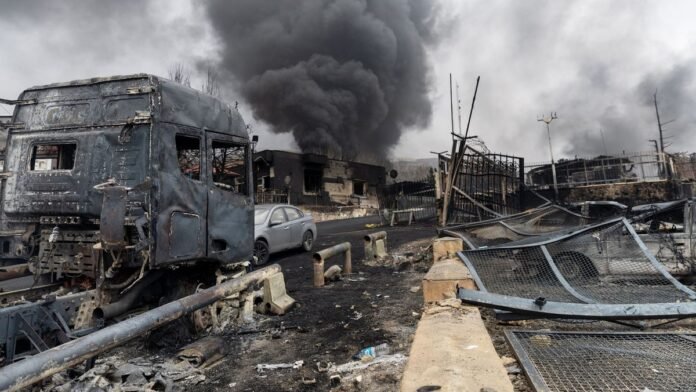


In the ongoing conflict between the US, Israel, and Iran, it is evident that Tehran is prepared for a prolonged battle against the stronger coalition forces. Turkey recently intercepted a second Iranian missile, expanding the conflict further and challenging the premature claims of victory made by the US.
Iran’s strategic dispersal of its Islamic Revolutionary Guard Corps across the country showcases its preparedness for unconventional warfare, despite the US’s belief that eliminating key leadership figures would cripple Iran’s military capabilities.
Continuing missile attacks from Iran have caused casualties in Israel, Lebanon, and even among US soldiers. Iran’s Foreign Minister highlighted the country’s defense strategy, emphasizing its adaptation to US military weaknesses and decentralized command structure for sustained warfare.
While the US boasts of success, Iran’s resilience and strategic maneuvers, including appointing Khamenei’s son to a leadership position within the IRGC, indicate a prolonged conflict ahead. The escalating involvement of European nations in the region further complicates the situation.
Iran’s ability to endure losses and inflict economic damage challenges Trump’s claims of victory, especially as the conflict’s economic and human toll rises. The use of asymmetric warfare tactics and cost-effective weaponry underscore Iran’s strategy to prolong the conflict and impose economic strains on its adversaries.
As the conflict intensifies, with global repercussions on the economy, it is clear that declaring victory prematurely is unrealistic and unsustainable in the face of Iran’s determined resistance.