
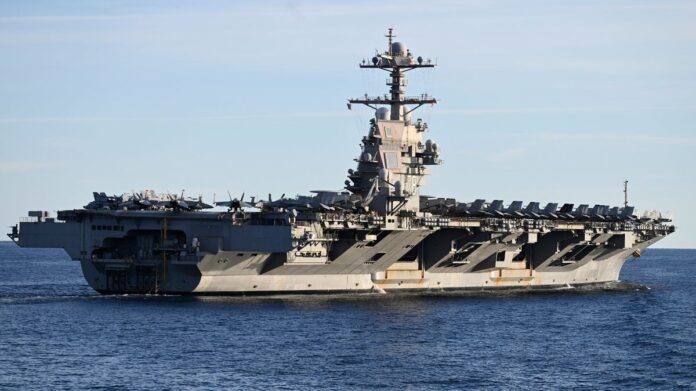


The United States, under the leadership of President Donald Trump, has strategically deployed its naval forces off the coast of Venezuela, targeting and destroying 20 suspected drug trafficking vessels. This military action comes in the midst of heightened tensions between the two nations, with the US Navy showcasing its firepower through the positioning of the USS Gerald R. Ford, considered the world’s most advanced aircraft carrier.
The escalation in military presence signals a shift in focus for the Trump administration, emphasizing its crackdown on drug cartels operating in Latin America. President Trump has labeled certain cartels as terrorists, declaring a direct confrontation with them. This aggressive stance has been reinforced by the recent sinking of alleged drug-smuggling boats and the reported casualties associated with these operations.
Amid speculation about a potential land invasion or strikes within Venezuela, Trump’s administration has refrained from disclosing specific details, including any potential CIA involvement. The move has sparked concerns among lawmakers, with calls for increased transparency and congressional oversight on the military actions in the region.
While some Senate Republicans have opposed measures to limit Trump’s authority to engage in military actions against Venezuela, others have urged for a more cautious approach, emphasizing the need for congressional approval in such high-stakes situations. The ongoing buildup of US naval forces in the Caribbean Sea and eastern Pacific Ocean has ignited debates about the administration’s motives and the necessity for a clear legislative mandate.
The political landscape remains divided, with Democrats and some Republicans advocating for a more restrained approach, emphasizing the importance of congressional input in shaping US foreign policy decisions. As tensions continue to simmer, the debate around US military intervention in Venezuela underscores the complexities and implications of such actions on a global scale.