
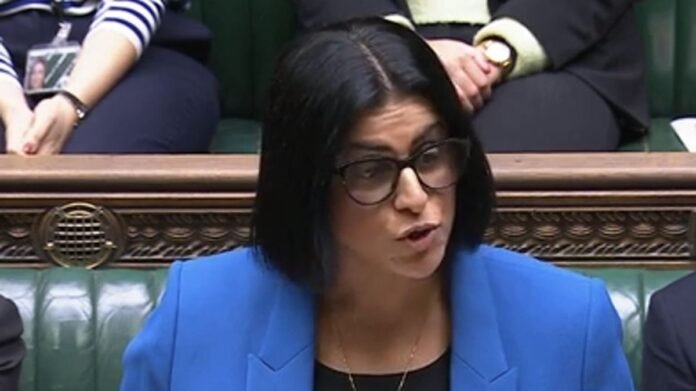


Shabana Mahmood has unveiled a significant revamp of immigration regulations, marking the most substantial changes in half a century. The proposed adjustments prioritize high-income individuals and public servants.
The Home Secretary asserts that the new policies, which extend the timeframe for migrants to seek permanent residency, aim to acknowledge those who boost the economy and adhere to regulations. The suggested standard period for qualifying for permanent settlement is expected to range from 10 to 15 years, a notable increase from the current five-year requirement.
While skilled public sector workers, entrepreneurs, and high earners are set to receive expedited processing, other migrants may face extended waiting periods under the Government’s proposal. For instance, individuals arriving via small boats or relying on benefits could encounter waits of 20 to 30 years before being eligible to apply for settlement.
Critics caution that the prolonged waiting times risk subjecting individuals fleeing war and persecution to decades of uncertainty and strain. In a plea to lawmakers, Ms. Mahmood emphasizes the need to manage migration effectively to prevent the amplification of division and hostility.
The revised regulations will impact around two million individuals who have arrived since 2021, excluding those with already established settled status. The Home Secretary emphasizes that settling in the UK permanently is not an automatic right but a privilege that must be earned.
To be eligible for permanent settlement, migrants must meet specific criteria, including a clean criminal record, proficiency in English up to A-level standards, no outstanding debts to the government, and a minimum of three years of National Insurance contributions. Those who have claimed benefits for a year or more could face a 10-year delay in applying, although volunteering can potentially reduce this waiting period.
Ms. Mahmood underlines the importance of migration in Britain’s history but stresses the necessity of balancing arrivals with integration and respect for British values. The Government highlights that frontline workers such as doctors, as well as high earners and entrepreneurs, will be prioritized for accelerated settlement processes.
The proposed changes also outline different timelines for settlement based on occupation and income level. Low-wage workers, including those in health and social care, are slated to face a 15-year qualifying period. Moreover, stringent penalties are anticipated for migrants reliant on benefits, potentially leading to a 20-year delay in settlement.
Furthermore, the Government may require migrants to obtain British citizenship before accessing benefits and social housing. Skilled healthcare professionals like doctors and nurses in the NHS are expected to be eligible for settlement after five years, while high earners and entrepreneurs could qualify in just three years.
In a statement, the Home Office emphasizes that the reforms aim to establish a fairer immigration system that recognizes the contributions of migrants to the UK’s economy and public services. Immediate family members of UK citizens and Hong Kong BN(O)s will maintain their existing five-year pathway to settlement.
Enver Solomon, chief executive of Refugee Council, voices concerns over the potential negative impact of the proposed regulations on individuals seeking refuge from conflict and persecution. He emphasizes the importance of providing stability for refugees to facilitate their integration and contributions to society.
Overall, the proposed immigration reforms aim to strike a balance between immigration control, economic contribution, and social integration, reflecting the government’s commitment to a structured and fair immigration system.