
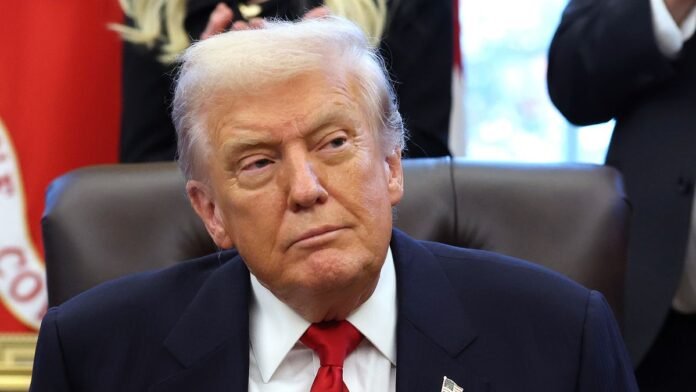


Millions of savers and employees in the UK are closely monitoring the upcoming developments with a sense of unease. The recent trade tariff threats by President Donald Trump are posing a significant risk to the global economy and, consequently, to our fragile job market. The previous imposition of tariffs on US imports by the President had a profound impact worldwide, creating uncertainty and disruptions.
Although Labour PM Keir Starmer was able to secure some concessions, UK companies exporting to the US are still facing challenges due to increased costs for buyers. The introduction of additional taxes further complicates the situation, leading to heightened uncertainty for businesses already adjusting to a new normal. Such circumstances may force companies to make tough decisions, potentially resulting in job cuts.
The outcome of these developments remains uncertain, with certain companies more vulnerable than others. UK car manufacturers, particularly premium brands like Jaguar Land Rover and Rolls Royce, could face increased costs for US consumers, impacting their competitiveness in the market. For instance, Jaguar Land Rover is still recovering from a cyber attack last year, which disrupted production at its facilities.
President Trump’s use of tariff threats as a means of exerting pressure on rivals, such as his recent claim over Greenland, adds to the confusion and concern among NATO allies. This has led to fluctuations in stock markets as investors assess the seriousness of the situation. While the FTSE 100 index experienced a decline initially, it performed better compared to other European markets, affecting workers whose pension investments are tied to equities.
Despite starting the year at record highs, any decline in the FTSE must be contextualized within the current crisis. The focus now is on how this situation unfolds, a challenging task given the involvement of President Trump. The prevailing uncertainty is likely to impact both businesses and consumers, leading to cautious spending behavior amid concerns about potential risks.
In 2026, the watchword is “fragile,” reflecting the state of the economy, job market, and consumer confidence. Fragility underscores the susceptibility to disruptions, emphasizing the need for vigilance in navigating these uncertain times.