
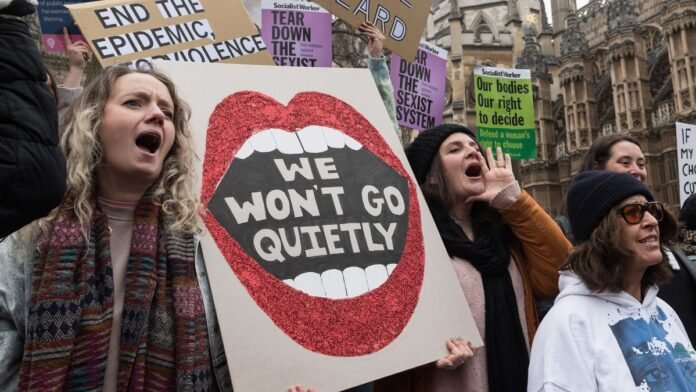


On this International Women’s Day, while many are celebrating, there are those like me who find it hard to join in. The social media landscape is flooded with empowering messages about women’s strength, sisterhood, and gender equality, alongside symbolic feminist gestures.
However, amidst the current global turmoil led by a president accused of sexual abuse, the superficial nature of these celebrations leaves much to be desired. Corporate gestures and beauty discounts overshadow the harsh reality faced by women worldwide: financial disparities, medical neglect, and constant threats to their safety at the hands of men.
Despite the theme of “Give to Gain” aiming to promote collaboration for gender equality, it falls short of addressing the true struggles women face daily. The recent spotlight on violence against women, highlighted by cases like Sarah Everard’s tragic murder, underscores the urgent need for tangible change in healthcare and maternity services.
A scathing report on England’s maternity services exposes systemic issues endangering women and newborns, including mistreatment, cover-ups, staff shortages, and discrimination. The increasing maternal death rate and harrowing personal stories paint a bleak picture of inadequate healthcare support for women.
The gender pay gap remains a significant issue, hindering women’s financial stability and decision-making regarding family planning. Economic challenges, job insecurities, and rising living costs make it difficult for women to envision starting families, despite societal pressures.
As a Gen-Z woman navigating a precarious economic landscape, the idea of parenthood seems financially unfeasible. The realities of student debts, job uncertainties, and housing struggles overshadow the romanticized notion of family planning often pushed onto young adults.
In conclusion, while International Women’s Day serves as a reminder of women’s strength and resilience, it also sheds light on the pressing need for concrete actions to address gender disparities in various aspects of women’s lives. The stories shared here reflect the ongoing struggles faced by women globally, urging for meaningful changes in policies and societal attitudes towards women’s rights and well-being.