
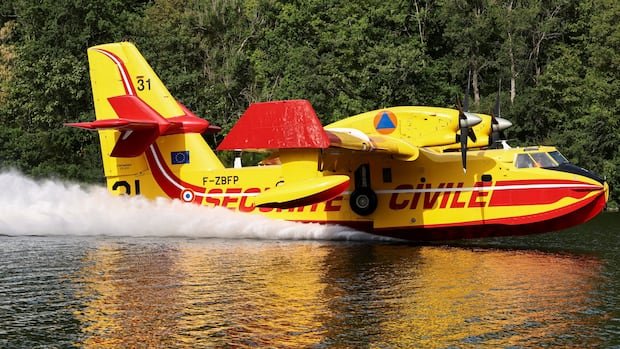


In the midst of a severe wildfire season in Canada, the United States, and Europe, there is mounting pressure on the manufacturer of the Canadair “Super Scooper” water bombers to ramp up production. De Havilland, based in Calgary, has taken the extraordinary step of restarting Canadair production after acquiring the program from Bombardier in 2015.
The renowned Canadair aircraft are meticulously crafted by hand in Calgary, with components sourced from various locations across Canada. The revival of the production line, announced in 2022, is progressing well, with the first two planes slated for completion and delivery by early 2028.
Political leaders in Canada and Europe are urgently seeking to secure these aircraft due to current shortages and aging firefighting fleets. Originally designed in the 1960s for battling wildfires in remote Canadian regions, the Canadair amphibious planes have the unique ability to collect water swiftly from lakes, rivers, and oceans to combat blazes effectively.
Amid growing concerns about insufficient firefighting resources, De Havilland is facing intense scrutiny. The company’s vice-president of corporate affairs, Neil Sweeney, acknowledges the significance of the aircraft and the responsibility to meet the demands for them.
There is a high demand for Canadair water bombers, prompting De Havilland to contemplate the construction of a second production line to meet the soaring requests. Alberta Premier Danielle Smith is collaborating with provincial and federal authorities to facilitate a substantial order from Ottawa, aiming to provide the necessary support for expanded production.
With existing orders for 38 water bombers and a delivery timeline stretching to 2032-2033, De Havilland is assessing the feasibility of scaling up production to meet the escalating demand. The Canadair planes involve a complex manufacturing process with a significant portion of the components being locally sourced.
Aviation expert John Gradek emphasizes the urgent need for additional production lines to address the global demand for Canadair aircraft, driven by escalating wildfire threats exacerbated by climate change. Failure to meet this demand could potentially pave the way for foreign competitors to develop rival firefighting aircraft, posing a risk to Canadian manufacturing jobs.
The increasing pressure for modern firefighting solutions has prompted calls for the creation of a national fleet of advanced firefighting aircraft in Canada. The federal government has taken steps to lease aircraft and helicopters to aid provincial wildfire suppression efforts, acknowledging the critical role of aerial resources in wildfire management.
While aerial firefighting units play a crucial role in mitigating wildfires, they are just one component of a comprehensive firefighting strategy. Ground crews remain essential in extinguishing fires, with aircraft serving to support containment efforts and protect communities. The federal government is committed to enhancing wildfire response capabilities and collaborating closely with provincial and territorial authorities to address the escalating wildfire risks effectively.