
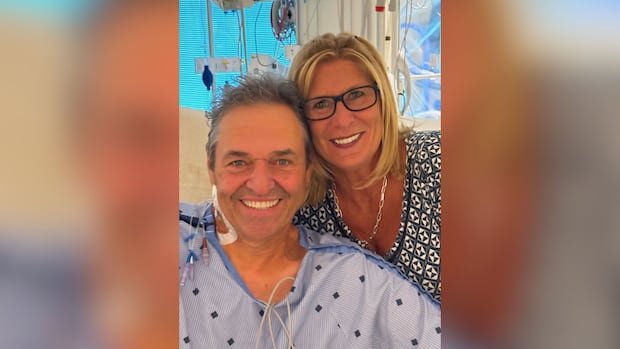


A 64-year-old man from Quebec has become the first person in North America to undergo a liver transplant using a regenerated liver, thanks to innovative technology that could significantly increase the number of viable livers for transplantation. Gérard Landry, a resident of Nouvelle in Quebec’s Gaspé Peninsula, had been battling liver issues for around 15 years, culminating in cirrhosis and liver cancer.
Prior to his surgery at Montreal’s Centre hospitalier de l’Université de Montréal (CHUM), Landry received surprising news from his doctor that his liver had been regenerated using a new machine called Liver Assist. This groundbreaking technology enables medical professionals to treat and evaluate donated livers outside the body before transplantation, making it possible to use organs that may have been previously deemed unsuitable.
Dr. David Hénault, a liver transplant specialist at CHUM, spearheaded the project and oversaw Landry’s operation. The Liver Assist system functions by connecting a donated liver to a machine that circulates an oxygenated fluid through the organ, potentially reversing damage caused by oxygen deprivation during the organ preservation period. Subsequently, doctors can switch to a blood-based solution to assess liver functionality in conditions mimicking the human body.
The implementation of this technology has the potential to enhance the availability of livers for transplantation. Hénault mentioned that the CHUM typically conducts approximately 70 liver transplants annually. A joint study with Transplant Québec explored the feasibility of revitalizing previously declined livers using the new technology, estimating that 20 to 24 additional livers could be made available for transplantation in the first year alone. As the technology gains broader acceptance, the number of viable livers for transplant could increase further, benefiting patients awaiting life-saving procedures.
In Landry’s case, the post-transplant outcomes were promising, with early indications of a successful procedure. Hénault noted that Landry’s recovery progressed exceptionally well, showcasing the positive impact of the machine on his health. Landry himself expressed eagerness to reunite with his family and resume his life in Gaspésie following his recovery. He also emphasized the importance of organ donation, underscoring that advanced technology can only be effective when supported by a sufficient supply of donated organs.
As Landry eloquently put it, “if you have a horse without a rider, you don’t have a ride,” emphasizing the crucial role of organ donation in saving lives and advancing medical treatments.