
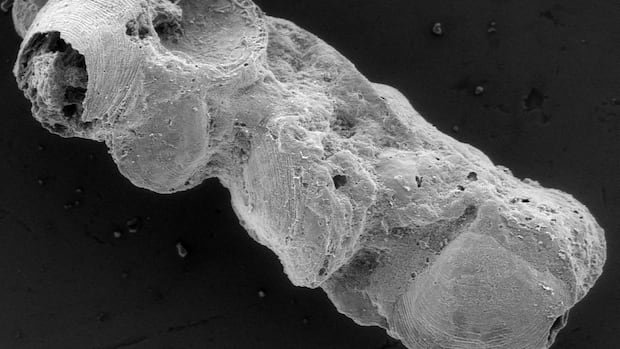


Long before the existence of dinosaurs on Earth, a surge in biodiversity led to the emergence of early ancestors of modern animals, coinciding with a rise in excrement production. A recent study, not commonly associated with paleontology, has brought attention to how the examination of coprolites, or fossilized feces, offers insights into the ecosystems of ancient Earth and their relevance to contemporary nutrient cycles and animal interactions.
The study, featured in the journal Trends in Evolution & Ecology, focused on analyzing fecal fossils dating back to the Cambrian period, approximately 540 million years ago. By studying feces remnants from primitive worms, invertebrates, and mollusk-like creatures, researchers uncovered evidence suggesting that fecal matter played a crucial role in enhancing the habitability of deep-water ecosystems and making nutrients more accessible during that period, which predates the era of dinosaurs by about 300 million years.
The abundance of fecal matter during the Cambrian period, as revealed by the study, holds significant implications for tracing the origins of present-day oceanic ecosystems. Julien Kimmig, a co-author of the study and head of the paleontology division at the Karlsruhe Natural History Museum in Germany, emphasized the importance of recognizing the substantial impact of fecal matter on sustaining both ancient and modern marine ecosystems.
The research underscores the value of coprolites in shedding light not only on the past fauna but also on the functioning of ancient ecosystems. By examining records of numerous coprolites from various global deposits, including specimens collected over time and those housed in museum collections, Kimmig and co-author Russell Bicknell identified fecal samples from diverse organisms such as burrowing worms, arthropods, brachiopods, and hyoliths.
Beyond offering insights into evolutionary aspects and predator-prey relationships, the study of coprolites aids in comprehending Earth’s ecological dynamics. Kimmig highlighted the relevance of paleontology in understanding how past ecosystems adapted to environmental changes and how these insights can be applied to predict future ecological scenarios.
The examination of feces during the Cambrian Radiation period, a period of rapid diversification of modern animal groups also known as the Cambrian Explosion, provides a unique perspective on the transformative changes that occurred in ecosystems during that era. By investigating waste products, nutrient cycles, and their impacts on biological diversity, researchers can gain a deeper understanding of ancient and future ecosystems, transcending the study of individual animal species to encompass broader ecological and geological contexts.
Paleontologists studying the Cambrian era emphasize the pivotal role of fecal analysis in unraveling one of the Earth’s most intriguing evolutionary events. The Cambrian Radiation marked a significant shift in the fossil record, introducing relatives of contemporary marine organisms such as shrimp and mollusks, signifying a period of immense biological diversification.
The study underscores the dramatic increase in fecal production during the Cambrian Radiation compared to the preceding Ediacaran period. By exploring fecal remains, researchers can glean valuable insights into nutrient cycles, energy flow, and their influence on biological communities, offering a holistic perspective on ancient ecosystems that can inform present-day and future ecological studies.
For some paleontologists, coprolites have become a focal point of research, offering unique glimpses into ancient ecological interactions. Karen Chin, a paleontologist and professor at the University of Colorado, highlights the importance of coprolites in uncovering not just the biology of ancient organisms but also their ecological relationships. By studying coprolites from the Mesozoic era when dinosaurs roamed the Earth, researchers can decipher intricate food webs and carbon cycles, shedding light on the intricate dynamics of ancient ecosystems.
Chin emphasizes the significance of coprolites as a valuable yet underexplored resource in paleontological research. While fossils of animal and plant remains provide crucial biological information, coprolites offer a complementary perspective on ancient ecological processes and interactions. By delving into the world of fossilized feces, researchers can uncover hidden aspects of ancient ecosystems and gain unexpected insights into the behaviors and diets of prehistoric creatures.
Overall, the study of coprolites offers a unique window into ancient ecosystems, providing valuable clues about evolutionary processes, nutrient cycles, and ecological dynamics that can inform our understanding of both past and future environments.