


UPDATE:
- The B.C. Conservation Officer Service released a statement on August 14, confirming the euthanization of a mother grizzly due to safety concerns following its food-conditioned behavior and lack of fear towards humans.
- The two remaining yearlings from the grizzly family were relocated to an undisclosed area for ongoing monitoring.
- CBC News attempted to contact the service for further details but received no response.
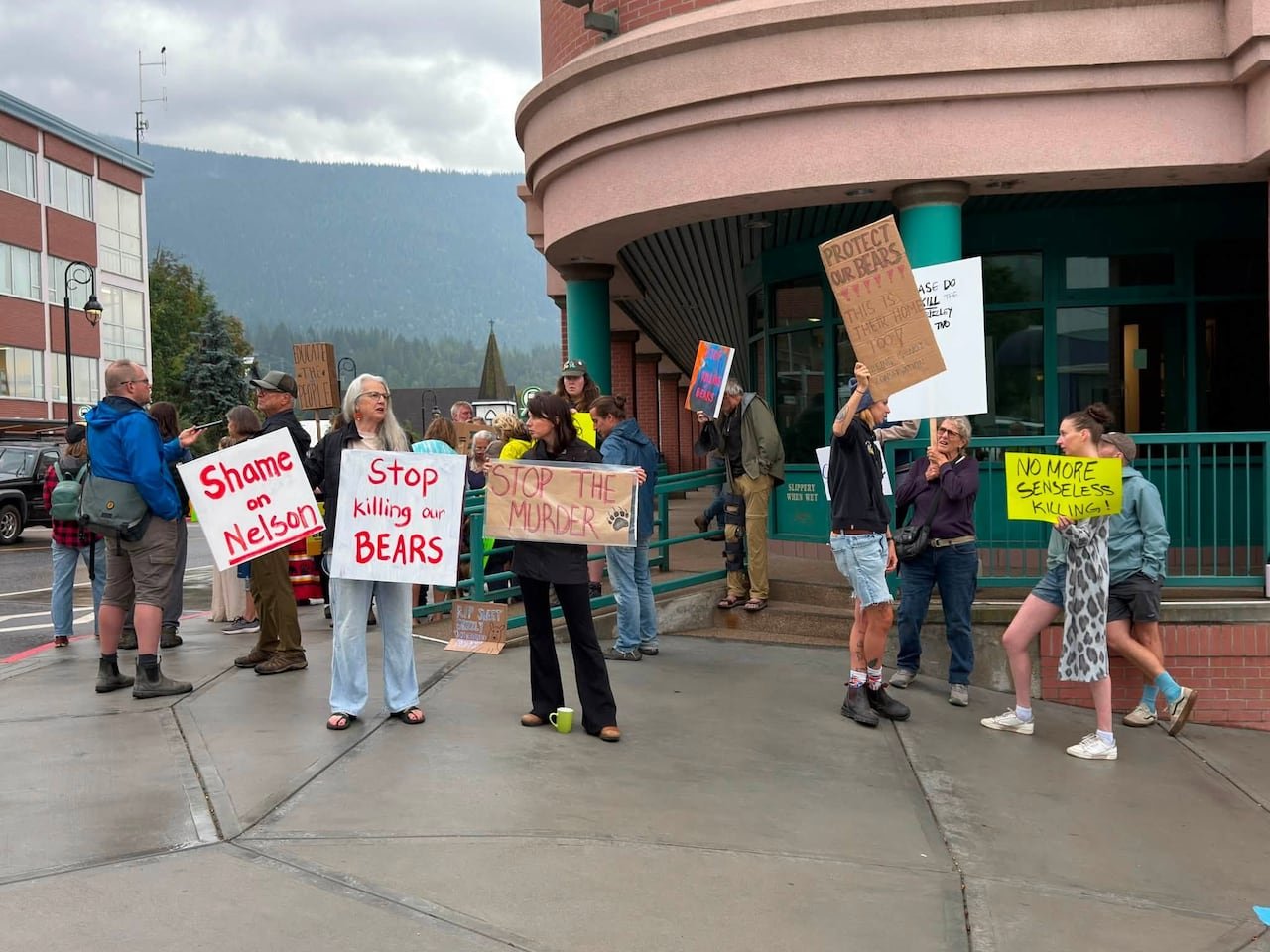
A demonstration occurred in Nelson, British Columbia, on Thursday to oppose the decision made by the B.C. Conservation Officer Service to put down a young grizzly bear.
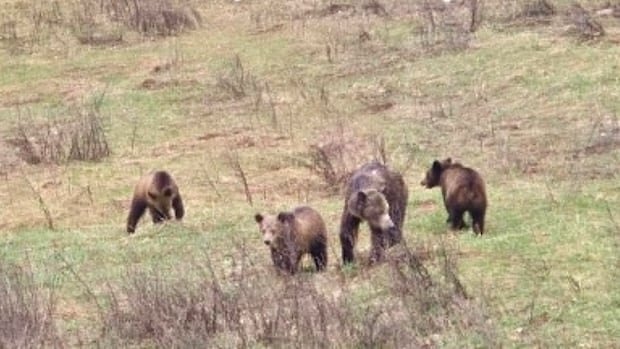
The bear was part of a group of grizzlies that have been frequently seen in and around the Nelson area.
Katie Graves, founder of the Ursa Project Society, described the emotional scene at the rally, mentioning tears and embraces among participants.
Graves argued that the young grizzly, which had a leg injury or deformity, was capable of mobility, keeping pace with its family, and sustaining itself.
She highlighted that many bears in the wild thrive despite physical limitations, citing the bear’s ability to run on three legs as it grew older.
The B.C. Conservation Officer Service (BCCOS) stated in a release that due to the bear’s age, injury, and history of conflicts, rehabilitation or relocation was not deemed feasible. Specific details on the conflicts were not provided.
The BCCOS expressed regret over the necessity of euthanizing an injured, ill, or troublesome bear, emphasizing the weight of such decisions.
According to Graves, the mother bear had initially brought cubs to the area in 2023, was relocated, but returned shortly after.
The fate of the other grizzlies, a sow and two yearlings, remains unknown, with the Conservation Service indicating that each captured bear will undergo assessment to determine the next course of action.
The incident has incited a flurry of reactions in local Facebook groups, predominantly critical of the decision to euthanize the grizzly bear.
While acknowledging the officers’ duty to public safety, several individuals stressed the importance of better waste management and maintaining distance from bears.
Wildlife biologist Clayton Lamb emphasized the necessity for stricter policies at the provincial and municipal levels to minimize attractants and prevent further bear casualties.
Lamb underscored the challenges of rehabilitating habituated or food-conditioned bears, particularly when they have grown accustomed to urban environments.
He underscored the inherent nature of grizzly bears to protect their young and territories, urging proactive measures to mitigate conflicts.
The City of Nelson revealed efforts in place to mitigate conflicts and preserve the wild nature of bears, including the installation of bear-resistant bins and public education initiatives.
The city’s bylaw services are actively enforcing waste management regulations and addressing instances of unsecured waste and attractants.