
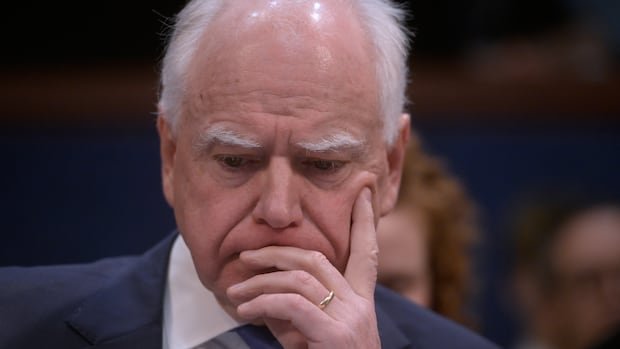


Minnesota Governor Tim Walz announced on Tuesday that the state will halt the review and processing of permits for proposed mining ventures in the Boundary Waters Canoe Area Wilderness. This decision comes four months after the federal ban on such projects was lifted by the U.S. Congress and the Trump administration.
Covering approximately 240 kilometers along Minnesota’s border with Canada within the Superior National Forest, the Boundary Waters attract numerous outdoor enthusiasts each year, including canoeists, kayakers, and campers. Governor Walz, a Democrat, emphasized the importance of preserving this pristine and sacred environment.
Although Governor Walz’s executive order is temporary and set to expire in April, the next governor could potentially uphold it. Despite the absence of an imminent mining project, Twin Metals Minnesota LLC, a subsidiary of Antofagasta Minerals based in Chile, has been actively pursuing copper, nickel, and other mineral extraction in the national forest since 2019, ensuring responsible waste management to prevent environmental harm.
Environmental concerns have been raised due to the proximity of the proposed mine site to the Boundary Waters, suggesting potential water pollution risks. President Trump’s lifting of the federal ban in April aimed to stimulate job creation and bolster the mining sector, a move met with mixed reactions.
Governor Walz’s order dictates that state regulators will not participate in federal environmental reviews of nonferrous mining within the Rainy River watershed, connected to the Boundary Waters. Additionally, Minnesota will refrain from conducting environmental assessments or permitting activities for mining proposals during ongoing litigation over state mining regulations.
Furthermore, Governor Walz has called for legislation to prohibit nonferrous mining in the Rainy River watershed, a move that has drawn criticism from U.S. Representative Pete Stauber, a Republican, who accused the governor of jeopardizing the region’s livelihood.
Becky Rom, chair of the advocacy group Save the Boundary Waters, commended Governor Walz’s decision, asserting that copper mining and the Boundary Waters cannot coexist safely. The action is seen as a crucial step in safeguarding clean water sources and preserving the cherished wilderness and outdoor economy of Minnesota.
James Coleman, a law professor at the University of Minnesota, highlighted the added uncertainty that Governor Walz’s order introduces for potential mining projects, emphasizing the intricate and lengthy approval processes involved and the impact of shifting political landscapes on project outcomes.