
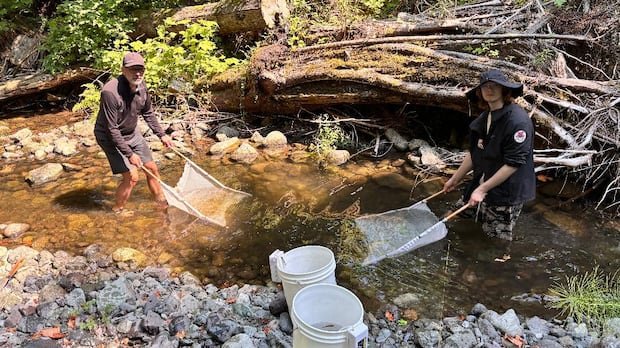


Parts of British Columbia are experiencing severe drought conditions this summer, leading to water restrictions in areas like Bessette Creek to safeguard salmon populations. Temporary protection orders were also issued for the Salmon River watershed due to the low water levels, which were later reinstated to address wildfire risks. Bob Crandall, treasurer of the Cowichan Lake Salmonid Enhancement Society, highlighted the increasing dryness of streams each year, prompting the society to conduct fry salvage operations to rescue fish and transfer them to other water bodies.
Crandall emphasized the importance of human intervention in addressing ecosystem challenges caused by human activities. While communities in British Columbia are supportive of these efforts, scientists caution that such interventions have limitations and may not offer a sustainable long-term solution. Collaborating with the Ts’uubaa-asatx Nation and volunteers, the society works tirelessly to relocate fish, mainly salmon, trout, and char, to areas with better water conditions.
The changing climate has made the rescue operations more challenging, with streams drying up farther upstream than in previous years. The process involves using aerators and bubblers to ensure fish survival during transportation. Crandall, who has a lifelong connection with fish, stressed the need to preserve these species within the ecosystem. The Ts’uubaa-asatx Nation plays a significant role in fry salvage efforts, utilizing drones to monitor drying streams and aiding in relocation activities.
Michelle Corfield, the lands and resource director of Ts’uubaa-asatx, underscored the cultural and environmental significance of salmon to the Nation, emphasizing the holistic approach to salmon conservation. However, similar rescue efforts in regions like France are encountering challenges due to severe drought and extreme heat events. Jean-Pierre Faure from the Fédération de Pêche du Rhône highlighted the inefficacy of relocating fish amidst unprecedented weather events, signaling the need for ecosystem restoration and adaptive water management strategies to address the impacts of climate change on aquatic life.
Faure stated that high water temperatures and decreased river flows are threatening fish populations, necessitating a shift from short-term interventions to long-term sustainability measures. The mounting costs and logistical challenges associated with fish relocation underscore the urgency of addressing underlying environmental issues to ensure the survival of aquatic species in the face of climate change.