
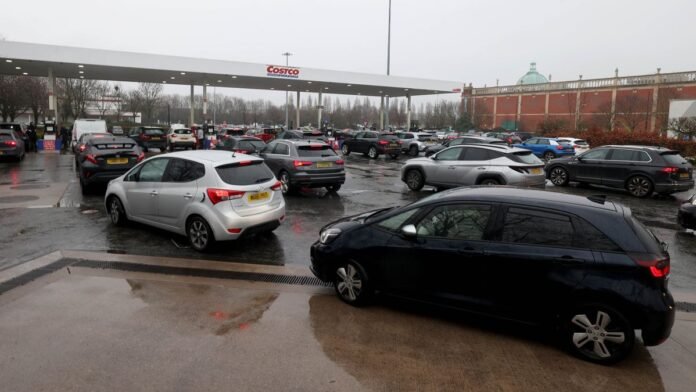


Forecourt operators are being cautioned against taking advantage of the surge in oil prices, with reports suggesting that some have raised pump prices by nearly 9p per liter recently.
Motorists are witnessing an uptick in petrol and diesel costs due to the repercussions of the conflict in the Middle East. According to the RAC, the average price of petrol has climbed by almost 2.5p per liter and diesel by over 3p per liter between last Saturday and Wednesday. However, there are instances where prices at certain forecourts have escalated even more.
Howard Cox, the founder of FairFuelUK, has highlighted concerns about potential “opportunistic profiteering,” noting that some forecourts have hiked prices by an average of 6.7p for petrol and 8.8p for diesel within the past 48 hours. He criticized these operators for selling fuel at inflated prices despite purchasing stocks before any wholesale price increases, labeling it as opportunistic profiteering.
Daisy Cooper, the Lib Dem Treasury spokesperson, expressed worries about consumers being overcharged for fuel, stating that forecourts have been raising profit margins for months. She urged regulatory intervention to prevent fuel companies from exploiting financially strained households. Meanwhile, Gordon Balmer, from the Petrol Retailers Association, explained that the conflict in the Middle East has pushed up wholesale fuel costs, necessitating retail price adjustments that could burden household budgets further.
The Petrol Retailers Association has called on Chancellor Rachel Reeves to reconsider a planned fuel duty increase later this year. Oil prices, specifically Brent crude trading above $83 per barrel, have surged, sparking concerns about potential spikes in energy bills in the coming months.
Dan Coatsworth, head of markets at broker AJ Bell, highlighted the rapid increase in oil prices, which could lead to soaring energy costs. The uncertainty surrounding the evolving situation in the Middle East has left investors apprehensive about the energy market’s stability.
With ongoing supply risks following the Middle East attacks, crude oil markets remain volatile, particularly concerning trade routes through the Strait of Hormuz.