
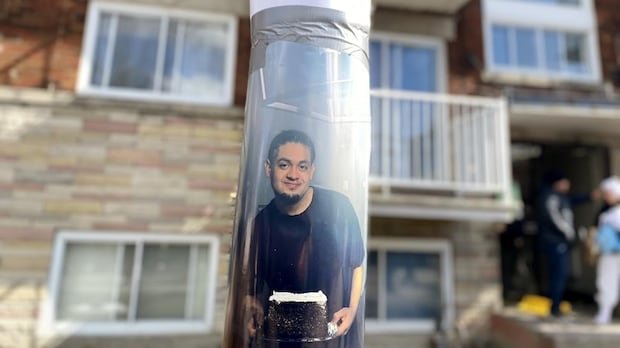


A recent coroner’s report has determined that the death of a 29-year-old man following a police encounter was accidental, with the restraint technique used by officers likely playing a role. Abisay Cruz passed away on March 30, 2025, after an incident that started on a back balcony in Saint-Michel, Montreal. His demise, along with footage of the incident that circulated on social media, led to protests in the area and heightened community distrust towards law enforcement.
The use of the “hogtie technique,” where a person’s limbs are bound behind their back while lying face down, was highlighted in the report. Coroner Géhane Kamel concluded that Cruz’s passing was due to a combination of cocaine intoxication and probable positional asphyxia during the police intervention. Kamel expressed concerns over the use of this restraint method, mentioning its association with deaths in custody and the infringement of safety and rights.
Kamel’s report revealed that Cruz, the second youngest of five siblings, was facing deportation to Honduras before his death, causing significant stress. On the day he died, a 911 call reported a distressed individual, later identified as Cruz, near Pie-IX Boulevard and 47th Street. Conflicting witness reports emerged, with some stating Cruz posed an immediate threat, while others described him as cooperative before the situation escalated.
A total of five police officers were involved in restraining Cruz, with Kamel noting that they kept him pinned face-down for over two minutes before repositioning him. The coroner criticized the lack of leadership from a supervising officer on the scene, emphasizing the need for intervention as Cruz’s condition worsened. Kamel urged the Montreal Police Service to ban the hogtie technique, equip officers with naloxone kits, and deploy body cameras for crisis situations.
Montreal police responded by affirming their commitment to implementing the recommendations. They clarified that the hogtie technique is not part of their training curriculum, emphasizing the importance of recognizing medical distress signs and providing swift medical aid to individuals in custody. The report’s findings were met with concern by Alain Babineau, a former RCMP staff sergeant, who questioned the persistence of teaching such controversial methods.
Additionally, the report raised issues with Urgences-santé, citing recurrent service shortages on the day of Cruz’s demise. Kamel highlighted the limited availability of advanced paramedic teams in Montreal, underscoring systemic challenges in emergency medical services.