
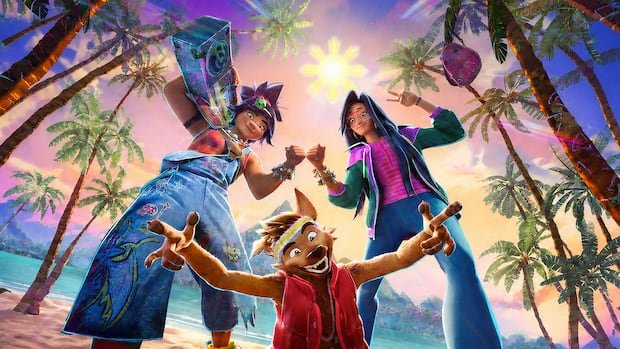


Canadian-Filipino Tricia Serdon, who grew up in Canada, yearned for a Disney princess who resembled her during her childhood. Sadly, she never found one that truly resonated with her until the release of “Forgotten Island.”
“Forgotten Island,” a production by Dreamworks Animation that premiered on September 25, marks a significant milestone as the first major Hollywood animated feature centered on Filipino culture and mythology. The narrative revolves around the diverging paths of childhood friends Jo and Raissa, with Raissa pursuing college in the U.S. while Jo remains in the Philippines.
The film introduces viewers to Nakali, a fantasy realm inhabited by supernatural beings inspired by Filipino folklore. These include the manananggal, a vampiric creature, and the kapre, a forest-dwelling giant. Despite drawing from ancient tales, the movie offers a fresh reinterpretation of these mythological figures.
Co-directors Januel Mercado and Joel Crawford, driven by a long-standing desire to showcase Filipino culture, crafted a narrative that delves into the rich but lesser-known mythology of the Philippines. Creatures like the weredog serve as metaphors for the characters’ emotional journeys, reflecting themes of adolescence and identity.
In addition to its captivating storytelling, “Forgotten Island” authentically captures the essence of Filipino family life. Scenes depicting family gatherings, complete with karaoke sessions and humorous exchanges between relatives, offer a glimpse into the cultural fabric of the Philippines.
The film’s commitment to representation extends beyond its storyline, with a voice cast featuring prominent Filipino talents such as H.E.R., Liza Soberano, Lea Salonga, and Jo Koy. The emphasis on Filipino artists behind the scenes underscores the importance of authentic representation in media.
As “Forgotten Island” resonates with audiences globally, it serves as a beacon of hope for future generations of young Filipinos seeking on-screen reflections of their heritage. The film’s success paves the way for more diverse storytelling and cultural representation in the entertainment industry.