
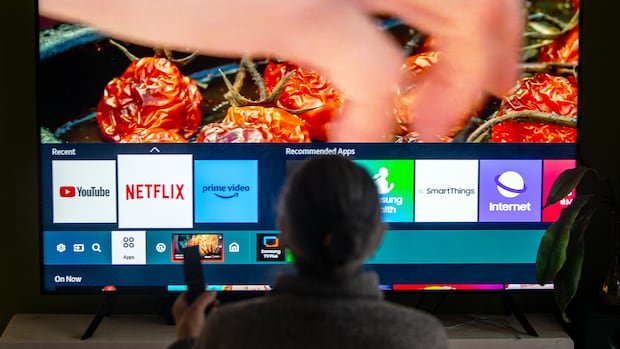


The trade dispute between Canada and the United States extends beyond traditional commodities like dairy and car parts to include aspects such as the presence of Canadian content on American streaming platforms like Netflix. According to a report from The Globe and Mail, U.S. negotiators had requested Canada to eliminate the requirement for American streaming companies to promote Canadian content, including French-language content. However, the Canadian government, led by Prime Minister Mark Carney, stood firm in protecting its sovereignty, French language, and culture, rejecting the demand during collapsed trade talks.
The conflict arises from longstanding regulations in Canada that mandate broadcasters to support and showcase Canadian content, known as Cancon, as per the Broadcasting Act introduced in 1991. While traditional media outlets were bound by these rules, the emergence of digital streaming services like Netflix posed challenges as they were not initially required to adhere to the same obligations. To address this gap, the former Trudeau government proposed the Online Streaming Act in 2022 to update the Broadcasting Act and ensure equitable contributions from online streamers towards Canadian programming.
The legislation faced opposition from American streaming companies but ultimately became law in April 2023, delegating the determination of contributions to the Canadian Radio-television and Telecommunications Commission (CRTC). However, the enforcement of financial obligations on streaming services faced legal challenges, leading to ongoing disputes and the recent decision by the CRTC to increase the contribution to 15% of revenue, eliciting criticism from the Motion Picture Association (MPA) and others.
In response to concerns about potential price hikes and trade violations, the Canadian government directed the CRTC to reconsider the payment increase and announced plans to eliminate these payments entirely, replacing them with taxpayer funding. The government’s focus shifted towards ensuring easier access to Canadian content on streaming platforms, highlighting the importance of cultural promotion and distribution in the digital age.
Additionally, the Quebec government’s enactment of Bill 109 to enhance the visibility of French-language content on streaming platforms further underscores the significance of cultural sovereignty in digital spaces. Experts suggest that the American government’s interest in influencing content distribution aligns with a historical soft-power strategy aimed at promoting American culture globally. This clash of cultural policies has become a pivotal point in trade negotiations between Canada and the United States.