
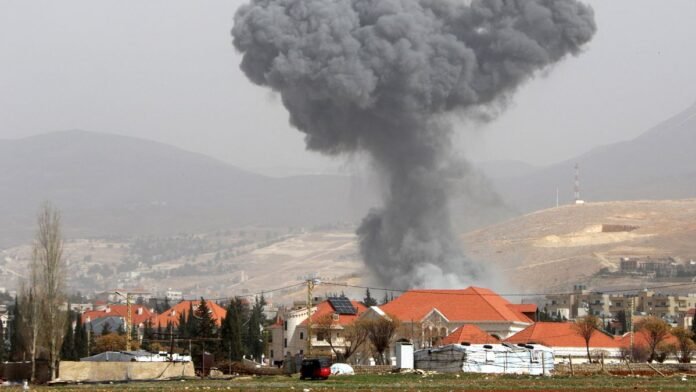


Various scenarios could unfold in the upcoming weeks regarding the potential escalation of conflict with Iran, unfortunately leading to more bloodshed and possibly triggering prolonged conflict. Newly appointed leader Motjaba Khamenei emphasized the desire for “revenge” for Iran’s fallen soldiers in his initial speech following his father’s death. He hinted at retaliatory actions against neighboring countries, indicating Iran’s intent to claim assets or inflict destruction, further escalating tensions in the region.
Furthermore, he discussed seeking compensation for recent strikes by potentially seizing assets from neighboring countries, hinting at Iran’s pursuit of reparations from affluent Gulf States. He also suggested Iran’s readiness to utilize proxies like Hezbollah to expand the scope of attacks beyond its borders. This message was relayed through a translator, possibly due to injuries sustained in a recent strike, highlighting the US’s underestimation of Iran’s resolve, even in the face of significant casualties, including leadership losses.
Recent reports have indicated that Motjaba Khamenei may have been injured, underscoring the Islamic Revolutionary Guard Corps’ strategy to outlast the coalition forces. By targeting Gulf States, traditionally aligned with the US and benefiting from Western support, Tehran has strategically positioned itself advantageously.
The conflict, dubbed Operation Epic Fury by the US and Operation Rising Lion by Israel, has not progressed as anticipated. Risk analysis firm Eigenrac has outlined three potential outcomes for the conflict.
The first possibility involves a controlled degradation leading to a negotiated settlement, where the US aims to neutralize Iran’s missile and nuclear capabilities within a limited timeframe. However, achieving this objective would require mounting internal pressure on Iran’s new leadership and eventually reaching a ceasefire, an outcome deemed possible but unlikely in the short term.
The second scenario envisions a protracted attritional conflict, extending beyond six weeks, with Iran leveraging asymmetric tactics through drones, proxies, and economic disruptions, while the US struggles to convert military superiority into diplomatic gains. This outcome is currently perceived as the most probable trajectory, given Iran’s resilient drone capabilities and proxy networks.
The most concerning scenario is an escalation towards regime change operations, potentially necessitating ground operations. If Iran refuses to surrender, the US and Israel might resort to boots-on-the-ground approaches, leading to significant humanitarian challenges across the region and potentially prolonging the conflict.