
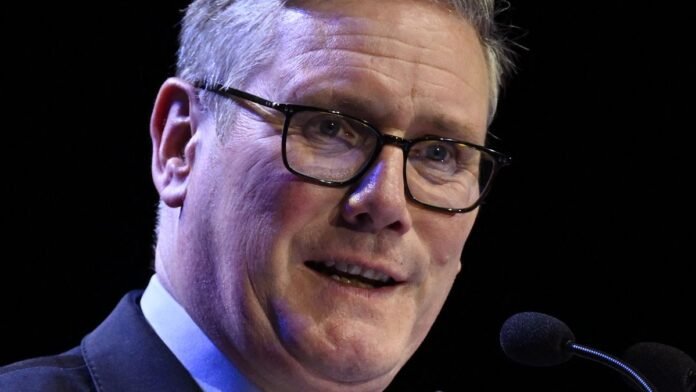


Keir Starmer has been cautioned that persistent “crisis messaging” regarding migration is leading most voters to perceive an increase in migration, despite it actually declining.
Recent data set to be unveiled today is anticipated to show a decrease in net migration to levels before Brexit. However, a significant portion of the public holds the belief that migration is on the rise, potentially fueling the misconception that immigration is spiraling “out of control.”
According to a survey by Ipsos/British Future Immigration Attitudes Tracker, 56% of respondents believe that net migration increased last year. The reality is that figures for 2024 more than halved, dropping from 848,000 to 345,000, after peaking at 944,000 in 2023.
Director of the British Future thinktank, Sunder Katwala, highlighted that despite the declining trend in net migration, the political discourse has not adapted to the changing figures. As migration figures approach pre-Brexit levels of around 300,000, the focus should shift from merely reducing numbers to discussing the optimal immigration levels for Britain.
Concerns are raised for Keir Starmer’s government, which has pledged to address migration issues, as the continuous crisis narrative may reinforce the perception among the public that asylum and immigration are unmanageable, leading to increasing polarization of public attitudes.
The study also unveiled a misconception among the public regarding the proportion of asylum seekers in immigration. While most believe it constitutes one-third of all immigration, the actual figure was around 14% during the year to June.
Although the majority of individuals hold balanced views on immigration, there has been a notable increase in the percentage of people (16%) who see no benefits in immigration, up from 7% in 2021. The study revealed that while a third of the population prefers immigration numbers to remain stable, 41% wish for a substantial decrease, and 15% support an increase.
Most respondents struggled to identify specific categories of work-related migration to reduce, with only a minority suggesting cuts in the numbers of doctors, care workers, lorry drivers, or seasonal farm workers.
The need for a transparent and open debate on the necessary and desired levels of immigration, managing associated pressures, and maximizing benefits to the UK is underscored by Sunder Katwala. Gideon Skinner, a senior director at Ipsos specializing in UK Politics, emphasized the increasing significance of immigration in public discourse and the need for nuanced discussions beyond simplistic number reductions.
The report advocates for the scaling up of the UK–France asylum agreement to handle Channel crossings effectively, phasing out the use of asylum hotels by the next year, expediting decisions, and establishing trustworthy pathways for settlement. It also stresses the importance of acknowledging legitimate concerns about immigration while distinguishing them from prejudice.