
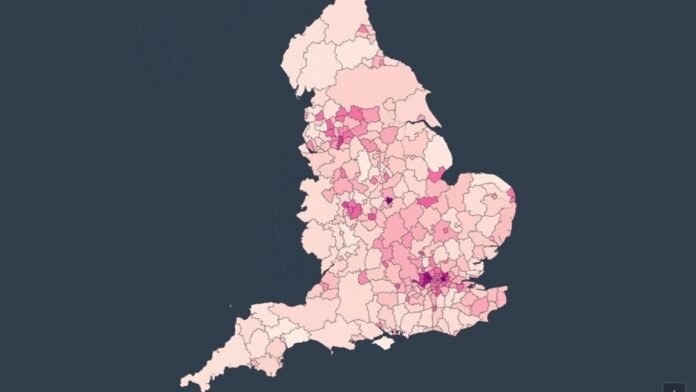


Cases of a Victorian superbug are on the rise as healthcare professionals report escalating levels of a concerning drug-resistant strain. The UK Health Security Agency (UKHSA) data reveals a total of 5,490 tuberculosis (TB) notifications in England in 2024, marking a 13% increase compared to the previous year. Notably, the proportion of drug-resistant TB has reached its peak since surveillance began in 2012, with 2.2% of confirmed cases displaying resistance to multiple drugs.
The UKHSA has issued a cautionary statement, signaling that if the upward trajectory of TB cases persists, the UK risks losing its low-incidence status for TB, which has been maintained since 2017. According to the World Health Organization (WHO), countries with less than 10 TB cases per 100,000 individuals are classified as low-incidence regions.
While England’s TB notification rate stands at 9.4 per 100,000 people, slightly below the low-incidence threshold, it has risen from 8.5 per 100,000 individuals in 2023. However, this figure remains notably lower than the peak rate of 15.6 notifications per 100,000 in 2011.
Certain areas within the country exhibit significantly higher TB notification rates. For instance, Leicester reported an annual average of 161 TB notifications over the past three years, translating to a rate of 42.1 TB notifications per 100,000 individuals, surpassing the WHO low-incidence threshold by more than four times.
It is mandatory for General Practitioners (GPs) to report suspected or confirmed TB cases to the National Tuberculosis Surveillance System. The issue of TB, formerly known as “consumption,” was a major cause of death in England and Wales between 1851 and 1910. Despite being a curable disease, TB remains a significant public health concern, necessitating swift identification and treatment to halt transmission chains.
Symptoms of TB include a persistent cough, fever, chills, loss of appetite, weight loss, fatigue, and coughing up blood. Individuals experiencing these symptoms for over three weeks, along with other concerning signs, should seek medical attention promptly. TB predominantly affects urban areas and is associated with deprivation, with higher infection rates observed among homeless individuals, those with substance abuse issues, and individuals involved with the criminal justice system.