
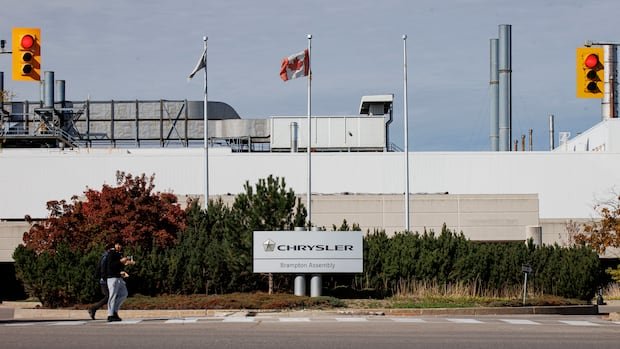


A major labor union disclosed that Stellantis is contemplating the potential closure and sale of the Brampton Assembly Plant. Unifor’s national president Lana Payne revealed that the union was informed by Stellantis this week about these considerations. However, the company has not formally notified the union of the plant’s closure, as mandated in their collective agreement.
According to Payne, Stellantis must provide at least one year’s notice to the union before closing or selling the plant. The company has expressed its intention to engage in discussions with another entity regarding a possible sale of the facility. Payne expressed deep disappointment with the situation, emphasizing the impact on the dedicated workers at the plant.
Stellantis responded by stating that they are gearing up for collective bargaining discussions and have no immediate announcements. Their primary focus remains on finding a sustainable manufacturing solution for the Brampton facility.
The union highlighted that the plant was originally scheduled for retooling to produce Jeep Compass vehicles, a process that commenced in January 2024 but was halted in February 2025. Subsequently, in October 2025, Stellantis informed the union of plans to relocate Jeep Compass production from Brampton to the United States, potentially leading to the plant’s indefinite shutdown.
Unifor reiterated its commitment to addressing this issue during upcoming contract negotiations with Stellantis. Payne stressed the importance of preserving high-paying union jobs established through decades of auto sector agreements.
Vito Beato, president of Unifor Local 1285, affirmed the union’s determination to safeguard the jobs at the Brampton plant. He emphasized that giving up on these workers would be a mistake, as the jobs are vital to the community. Beato expressed optimism about finding solutions and returning to vehicle production, stating that closure is not an acceptable outcome.
Unifor Local 1285, representing approximately 2,200 members at the Brampton plant, mentioned that workers are currently receiving income security during the plant’s idle period.
Local authorities and government representatives have also expressed solidarity with the union and workers at the plant. They are actively engaged in discussions to protect jobs, ensure continued production in Canada, and seek long-term investments in the automotive sector.
It is a critical time for the automotive industry as negotiations continue between Unifor and major automakers, with a focus on securing the future of auto manufacturing jobs in Canada.