
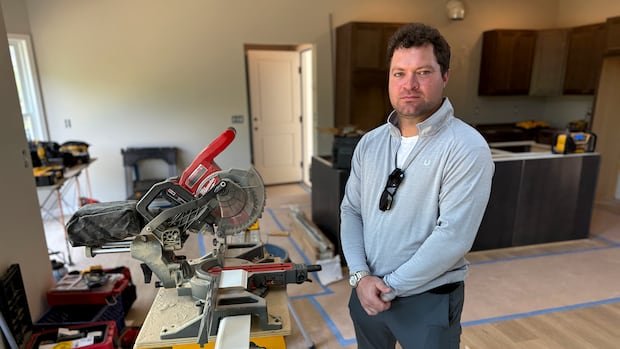


The sound of a nail gun and buzz saw fills the air as Joe Koch’s carpentry team adds final touches to a two-story home in Ohio. Koch, overseeing his family business, had plans for more new builds in the area, but the U.S. trade war with Canada and other nations has disrupted those plans.
Koch explains that due to the trade war, people are postponing construction projects, waiting for lower interest rates and reduced tariffs. This situation reflects the challenges faced not just by his business but by many others in Ohio. The tariffs imposed by President Donald Trump have increased costs for businesses and consumers alike.
Koch mentions a shift in his supply chain from Canadian to local products, highlighting the need for adaptability amidst trade uncertainties. He emphasizes the importance of building strong relationships and making compromises in the face of trade disruptions.
The ongoing trade war has made financial planning and sourcing materials more complex for businesses in Ohio. Koch acknowledges the need for partnerships and the reality of a globalized economy that may not always favor local production.
Despite the trade storm, Koch remains resolute, likening the situation to a game of chess where the goal is to minimize damage and persevere. He expresses determination, stating, “We’re used to it. We’re Youngstown, Ohio.”
Youngstown, once a steel hub, has diversified its economy but still relies on manufacturing, with over 20,000 jobs tied to various sectors. The impact of the trade war on Ohio’s exports to Canada and imports from Canada is significant, affecting industries across the state.
Local residents in Ohio share mixed feelings about the trade war, expressing frustration over increased costs and uncertainty. Some believe the tariffs are damaging the economy and fear long-term consequences on jobs and businesses.
Business leaders in the area have differing views on the tariffs, with some seeing benefits while others view them as detrimental. The trade war has created challenges for companies like Shapes Unlimited, affecting their expansion plans and operational costs.
As the trade war continues, businesses in Ohio are navigating the uncertainties and assessing the potential impacts on their operations. The trade tensions are not only affecting businesses but also influencing voter sentiments as the November midterms approach.
CEO Doug Rende of Shapes Unlimited voices concerns over the trade war’s impact on his business and industry, emphasizing the need for stability and predictability in trade relations. He underscores the significance of Canadian aluminum and urges for a resolution to the ongoing trade disputes.
Rende’s growing impatience with the trade war reflects a broader sentiment among businesses in Ohio, hinting at potential shifts in voter preferences based on how the trade issues are managed. The trade war has raised questions about loyalty and support, prompting Americans to reevaluate their political and economic interests.