
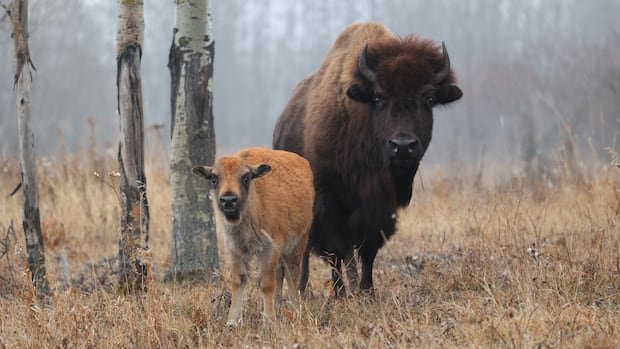


Once abundant in North America, bison faced near-extinction due to relentless hunting, leading to significant changes in their genetic makeup. A recent study published in the journal Science delved into the DNA of 160 bison, offering insights into their evolutionary journey over the past 20,000 years.
The research involved a team of nearly 40 scientists, predominantly from Canada, led by paleogeneticist Jonas Oppenheimer from the Paleogenomics Lab at the University of California, Santa Cruz. By analyzing ancient DNA extracted from fossilized remains, the study aims to inform conservation strategies to ensure the survival of bison populations.
Historically interconnected, bison now exist in isolated groups managed for conservation. The study revealed that the genetic diversity of modern herds has been compromised due to fragmentation, posing challenges to their resilience.
According to Oppenheimer, bison populations were genetically homogeneous across North America until recent times when human activities nearly wiped them out, leading to a significant bottleneck effect and subsequent genetic differentiation among herds.
Genetic Mapping and Diversity
By sequencing bison genomes from both ancient and modern sources, researchers were able to track changes in the species’ genetic diversity over time. Samples were collected from managed herds across North America, as well as from ancient specimens in various collections.
The study involved sequencing 115 ancient bison genomes and 45 modern genomes, combined with existing data to create an extensive genetic map. Chris Jass, a paleontologist, highlighted the importance of using ancient DNA to understand the impact of historical events on current bison populations.
The decline in bison populations during the late 19th century did not immediately affect genetic diversity, as the species had maintained a widespread and uniform gene pool. However, the study revealed that despite the survival of genetic diversity, it is now segregated among different herds, each with its distinctive genetic makeup.
Distinct Bison Subspecies
Contrary to popular belief, the study showed that bison have minimal cattle ancestry, with wood bison and plains bison being genetically distinct. Wood bison, adapted to northern forests, differ significantly from plains bison, which traditionally inhabited grasslands.
The split between the subspecies occurred around 3,000 years ago, influenced by changing climates that led to the expansion of boreal forests. Human interventions later caused interbreeding between the subspecies, emphasizing the need for separate management strategies.
The findings underscore the importance of preserving distinct bison populations and implementing strategies to prevent further genetic homogenization. Efforts are underway to reconnect isolated herds and enhance genetic diversity through managed breeding programs.
‘Conservation Strategies’
The study, co-authored by bison geneticist Greg Wilson, highlights the significance of genetic preservation in conserving bison populations. Wilson emphasized the need for proactive measures to prevent inbreeding and restore genetic diversity among isolated herds through controlled breeding initiatives.
By leveraging ancient genomes as a reference point, researchers aim to facilitate gene flow among bison herds, allowing for the reintroduction of genetic diversity and ensuring the long-term survival of these iconic species.
Discover more top stories