
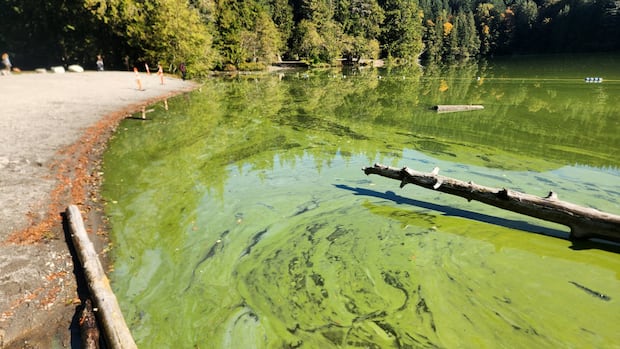


An aeration system is being set up at a well-known provincial campground’s lake in Squamish, B.C., which may help eliminate a blue-green algae bloom.
For the past three years, authorities have intermittently closed Alice Lake due to cyanobacteria blooms.
Ken Ashley, a limnologist, environmental engineer, and fisheries biologist, has installed over 20 similar devices across B.C. The aerator at Alice Lake will be the first of its kind in the Sea-to-Sky area.
Ashley expressed surprise at the presence of the bloom on the lake.
“I’ve never encountered this on a coastal lake in the Sea-to-Sky region in November,” Ashley remarked.
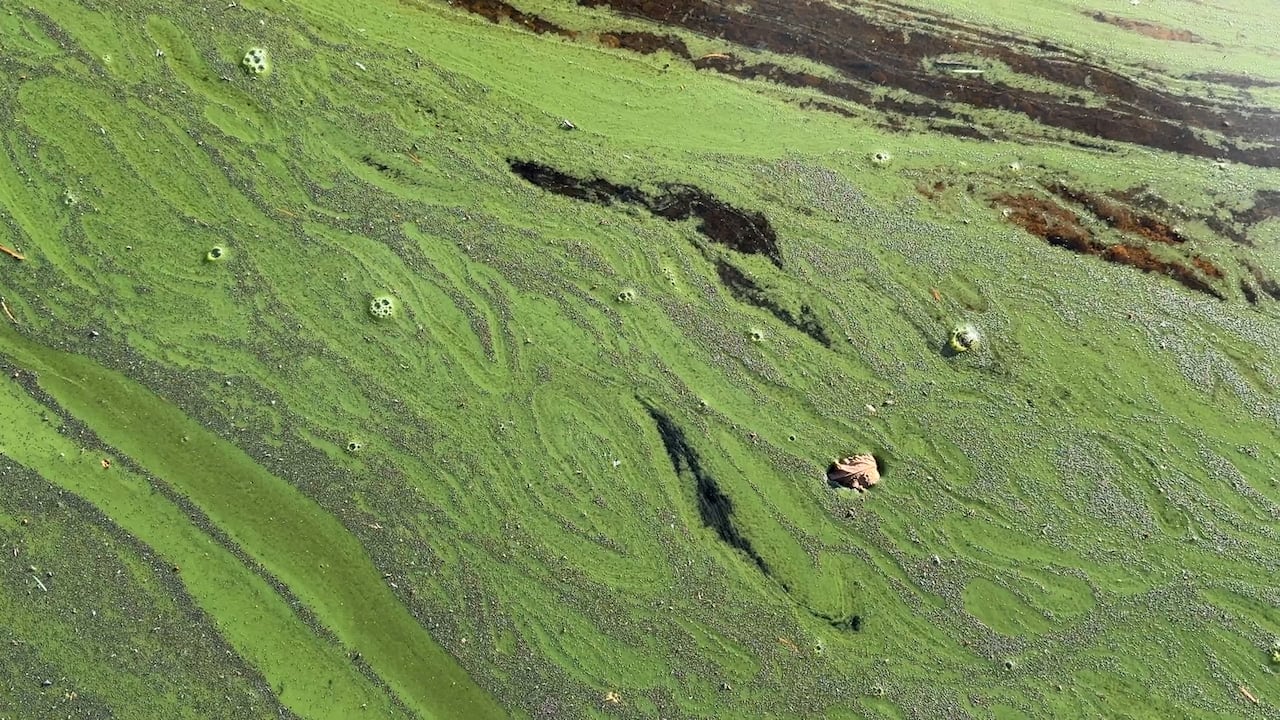
Blue-green algae blooms, also referred to as cyanobacteria, are appearing in lakes throughout the southern regions of B.C. near Vancouver and Victoria. Environmental engineer Ken Ashley notes that this indicates poor lake health. (Alanna Kelly/CBC)
Cyanobacteria, commonly known as blue-green algae, are microscopic organisms found globally. They flourish in shallow, warm, and slow-moving waters and can produce various toxins hazardous to humans and animals, as stated by Vancouver Coastal Health.
Exposure to the toxins produced by blue-green algae can lead to symptoms such as vomiting, diarrhea, or fever in both humans and pets. Additional effects may include skin rashes, ear and eye irritation, dizziness, and cramping.
“Dogs can swim in there and can die,” Ashley warned.
How it operates
The aeration device at Alice Lake is designed to help circulate the water by releasing compressed air into the lake.
“You can think of it like a pacemaker for a human with an irregular heartbeat,” explained Ashley. “It circulates enough water so that, theoretically, the lake will be completely mixed approximately every three days.”
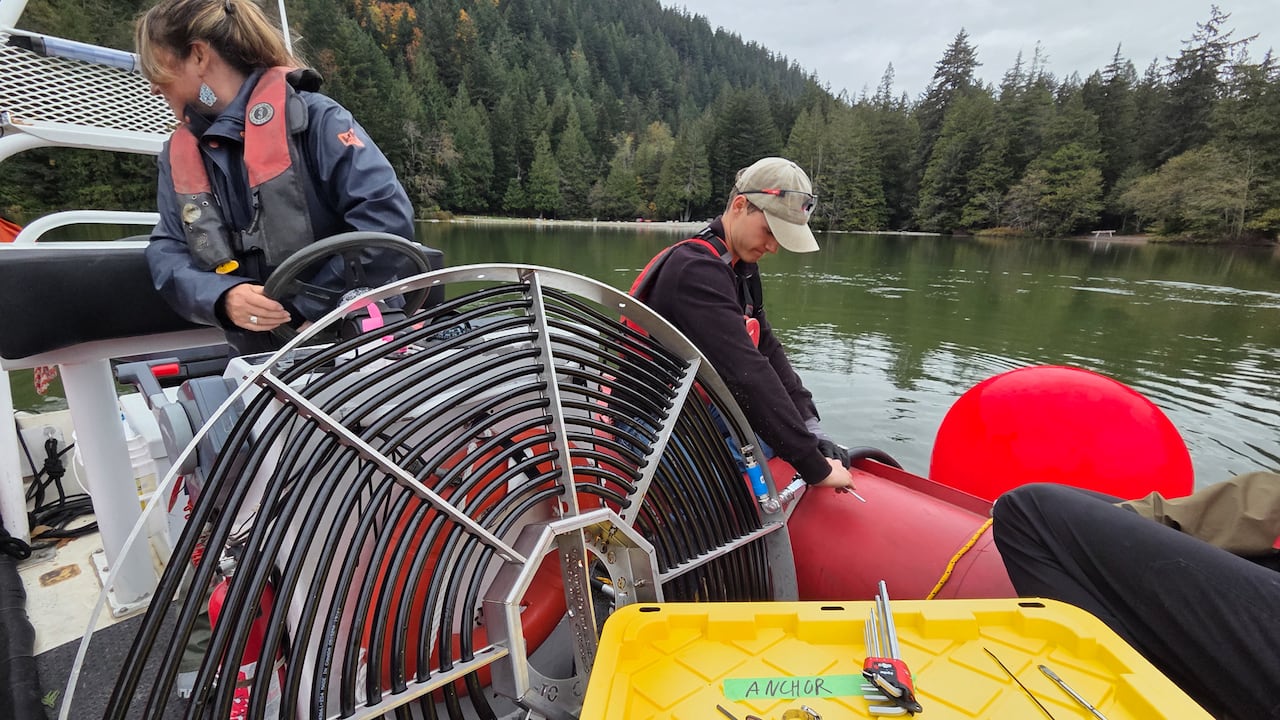
This large circular apparatus, referred to as the ‘bubble diffuser’ by environmental engineer Ken Ashley, will be submerged in the lake. (Shannon Harris)
According to Ashley, the device, resembling a bed spring, is positioned about 14 meters deep on a chain and linked to an orange buoy at the lake’s surface.
“There’s no noise from the ascending bubbles. They simply rise to the top … what you’ll notice is a radial movement of water extending about 20 meters from that orange float,” Ashley detailed.
Roger Pieters, a research associate at the University of British Columbia, is monitoring the lake’s temperature.
“Currently, the surface water is warmer than the deeper water, resulting in what is called temperature stratification,” Pieters noted.
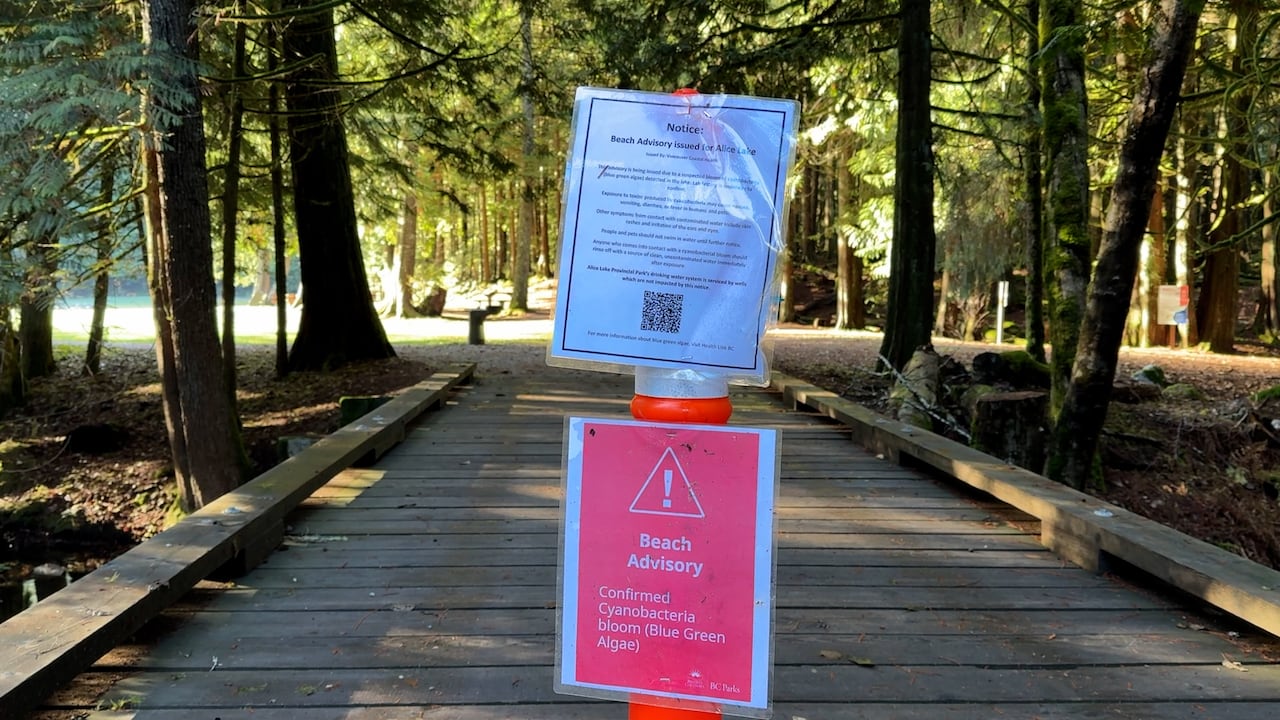
The first cyanobacteria bloom at Alice Lake was detected in 2024 and has reappeared every year since, leading to temporary closures of the popular swimming area. (Alanna Kelly/CBC)
Once the lake’s temperature hits 7 degrees Celsius, the system will be activated via satellite internet, with Ashley anticipating this will occur on Monday.
When the aerator is operational, it will thoroughly mix the lake, ideally preventing any further blooms from occurring during the winter months.
What is causing this?
While the aerator concept may appear straightforward, Ashley clarified that extensive research has been conducted to bring it to fruition.
“I was assigned to begin this work in the 1970s, and I have been engaged in it for over 40 years now,” said Ashley.
He learned about the bloom at Alice Lake from long-time resident Dave Dunkley, who first noticed the color change during a walk.
“It raised my concerns,” Dunkley shared. “I spend time here … and my children swam here while growing up.”
Last year, Alice Lake attracted over 500,000 visitors, as reported by B.C. Parks.
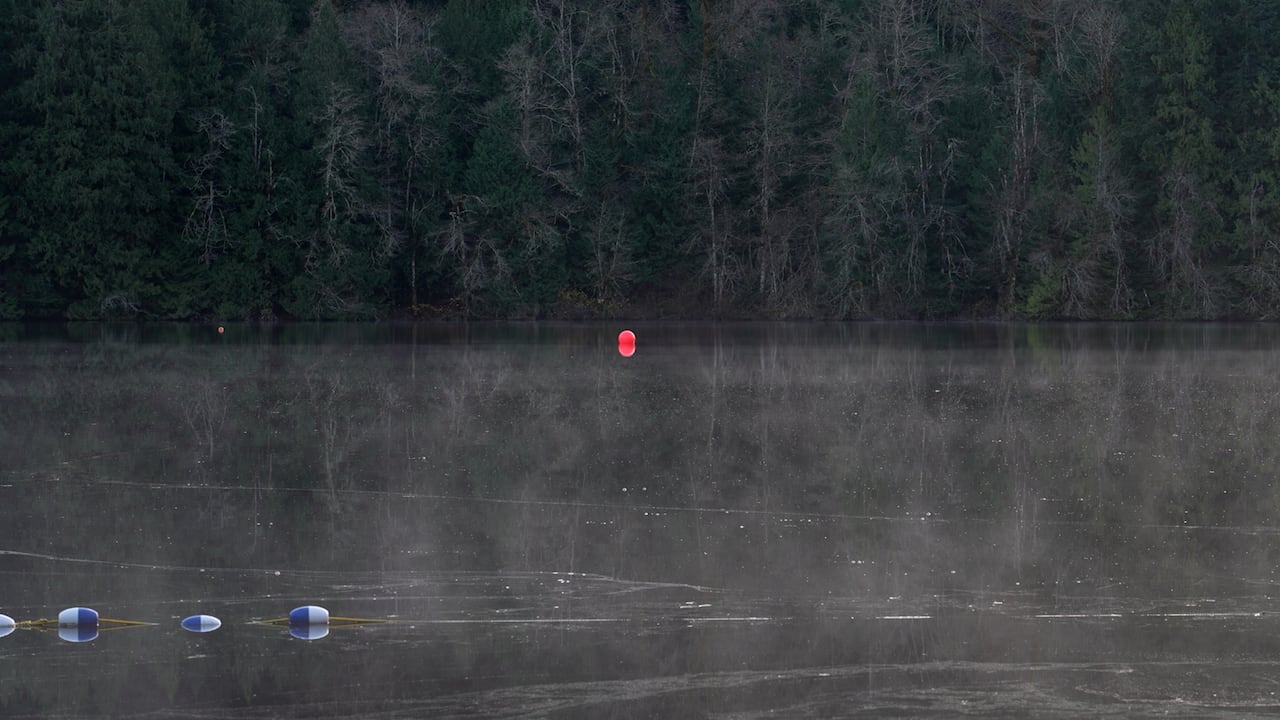
Researchers are hopeful that visitors will refrain from disturbing the buoy, which is positioned in the lake’s center, allowing them to continue collecting data and aerating the water. (Alanna Kelly/CBC)
“It’s one of the treasures in the Squamish area for recreational activities. It’s free and set in a stunning environment,” Dunkley stated.
Ashley pointed out that Alice Lake is warming at a rate of one degree per decade, and the situation is exacerbating due to climate change.
“Climate change has reached a point where it is significantly impacting the lake’s conditions,” Ashley remarked.
The Ministry of Environment indicated that the Alice Lake water quality initiative combines knowledge from various organizations, including the Ministry of Water, Land and Resource Stewardship, B.C. Parks, Vancouver Coastal Health, and the University of British Columbia.
The aeration system does not ensure that future blooms will be avoided.
“B.C. Parks will keep monitoring water quality and will adapt the operation of the system according to lake conditions and scientific recommendations,” according to their website.
Funding for the device and the project has been provided through the B.C. Parks license plate program.