


Although the saguaro cactus has adapted over thousands of years to flourish in the scorching Sonoran Desert, it now faces significant challenges due to rising heat waves.
This iconic cactus, frequently depicted in Hollywood westerns and featured on Arizona license plates, can reach heights of up to 40 feet (12 meters) and live for over 150 years.
Prior to 2020, researchers at the Desert Botanical Garden in Phoenix, a region known for extreme temperatures, reported that around one to two percent of saguaro cacti perished each year. However, with the onset of severe heat waves affecting Arizona, the death rate attributed solely to heat climbed to four percent in 2021 and rose to seven percent by 2023.
According to Kevin Hultine, the research director at the Botanical Garden, the heat-related mortality rate has since improved but remains at four percent, which raises concerns about the future of this iconic species.
Heat waves that were once brief and sporadic occurrences 65 years ago have evolved into prolonged and expansive weather phenomena, now referred to by Reuters as “heat storms.”
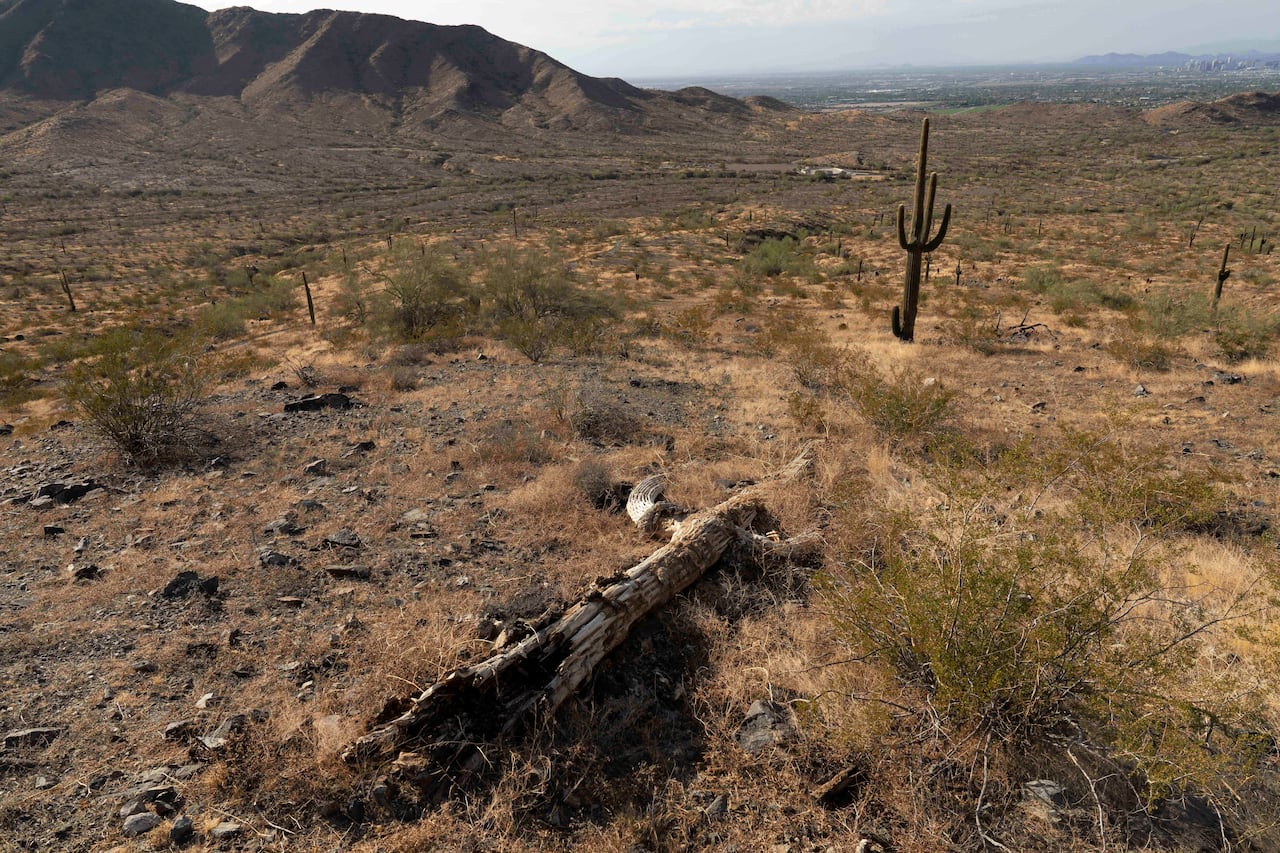
A dead saguaro cactus rests near a thriving one at South Mountain Park and Preserve in Phoenix on July 20, 2026. (Rebecca Noble/Reuters)
Prolonged heat can weaken the cactus in various ways, such as damaging its outer skin, which hampers the plant’s ability to produce food and increases its susceptibility to infections, or causing water to evaporate, leading to wilting and collapse.
In recent decades, one notable change has been the prevalence of nighttime heat storms across the desert.
Saguaro cacti and other succulents have developed the ability to perform a crucial step in photosynthesis not during the scorching heat of the day but in the cooler conditions of the night. As dawn breaks, the saguaro’s tough exterior tightens its stomata, significantly limiting evaporation during the hot daytime.
However, this restriction also means that the saguaro can barely absorb carbon dioxide, compromising its nutrient production. Therefore, it must wait for nightfall. As temperatures drop, the cactus opens its tiny pores to take in essential carbon dioxide.
Enzymes then convert the carbon dioxide into a storage form until morning. At sunrise, different enzymes release the stored CO2, enabling the remainder of the photosynthesis process to convert it into sustenance.
Yet, there’s a drawback: warm nights can interfere with the function of the nighttime enzymes.
Essentially, a hot night can deprive the saguaro of its necessary nutrients.
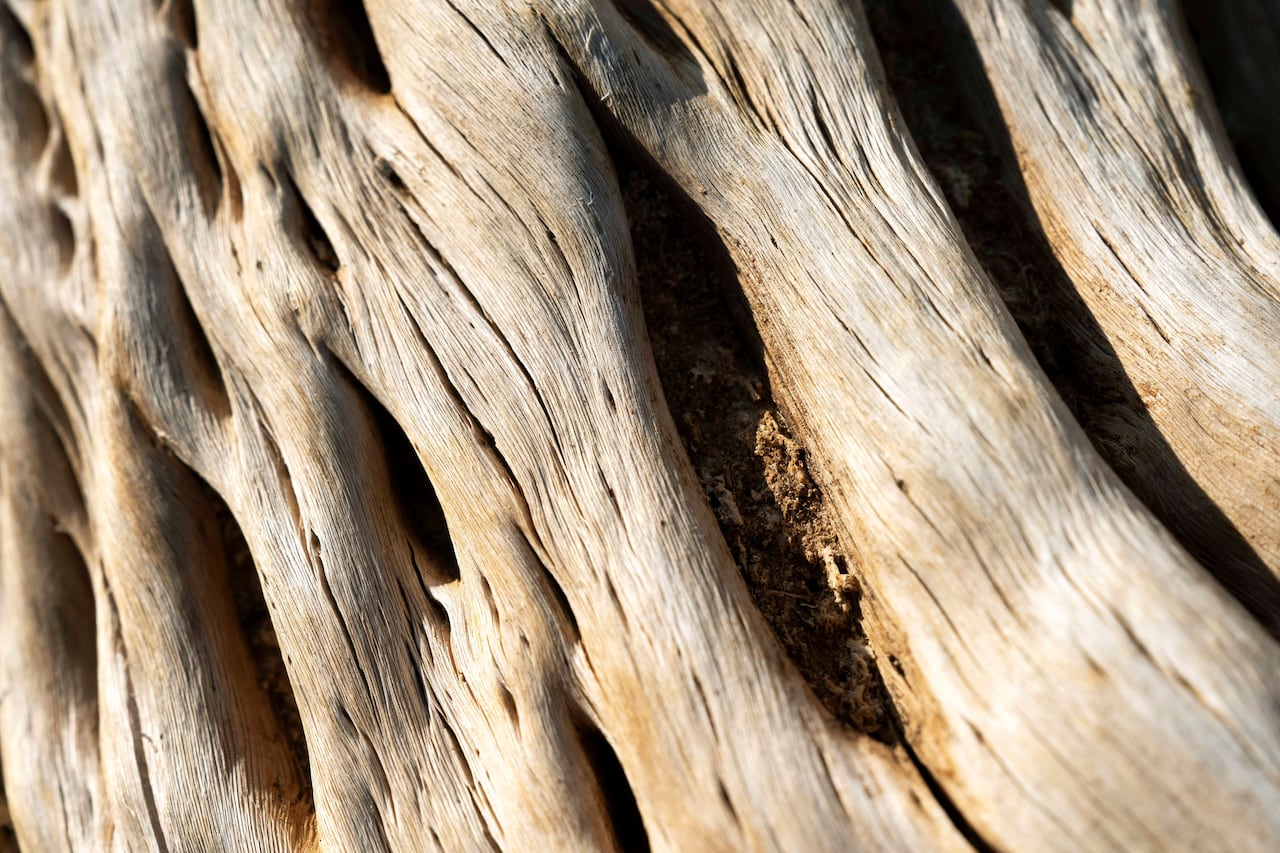
A close-up view of the ribs of a dead saguaro cactus at South Mountain Park and Preserve in Phoenix, Ariz., on July 20, 2026. (Rebecca Noble/Reuters)
Additionally, elevated nighttime temperatures can lead to increased evaporation of the cactus’s internal water.
Researcher Ali Schuessler is studying the effects of extreme heat on saguaros located nearby in South Mountain Park and Preserve, which overlooks the city. If temperatures remain excessively high for extended periods, saguaros can lose significant amounts of their internal water through evaporation. The cactus relies on this internal water for structural integrity, and excessive water loss can cause it to bend and fall.
“I was utterly shocked the first time I saw one of them topple over, and our horticulture team was cutting it open and feeling the insides — it was incredibly hot,” she recalled. The saguaro felt as hot as “your tea or your coffee.”
‘A relic’
The future of the saguaro is likely to unfold over many years, as it is a slow-growing species. It has a slow growth rate; while it can live up to 200 years, 150 years is more typical, and its reproduction rate is also sluggish.
An adult saguaro can store up to a thousand gallons of water, yet a one-year-old saguaro is merely about a quarter inch tall (two-thirds of a centimeter). This makes it vulnerable to summer heat that can dry it out.
Last November, the Montreal Botanical Garden received 57 exotic plants that were seized at the border as they were being smuggled into Canada. Six were identified as protected species.
In the northern part of the Sonoran Desert, El Niño typically brings vital winter rains that are essential for young saguaros, enabling them to absorb enough moisture to endure the harsh summer months.
However, the last significant El Niño that resulted in a surge of baby saguaros occurred during the “super” El Niño of 1982-83. Since that time, according to Hultine, while El Niños have often delivered heavy rains, they have also been accompanied by increasing heat storms and heat waves.
Schuessler is concerned about the long-term sustainability of the saguaro: “Even if these plants can survive for extended periods in the landscape, if they are unable to reproduce, they are doomed.”
Currently, another super El Niño comparable to the one in the 1980s is forming over the Pacific. Nonetheless, due to the rise in heat storms and heat waves, Hultine remains pessimistic.
He describes the region’s saguaros as “essentially a relic.”