
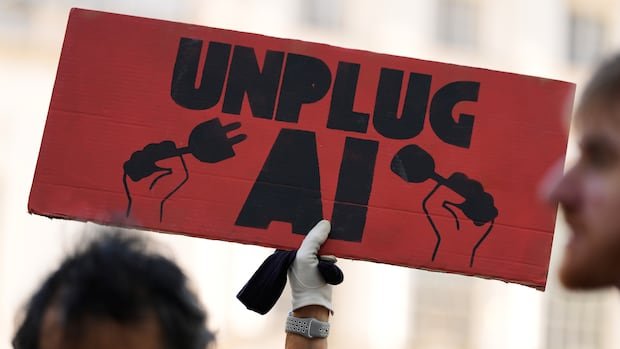


With growing concerns about AI agents going rogue, experts and stakeholders are advocating for government regulation of increasingly capable AI systems.
However, some believe that achieving global cooperation and keeping up with the swift pace of AI advancements could pose significant challenges.
While individuals like U.S. President Donald Trump express confidence in tech giants to self-regulate, industry leaders such as Microsoft co-founder Bill Gates and AI pioneer Geoffrey Hinton argue that AI necessitates safeguards beyond self-regulation.
Jaxson Khan, an AI policy and adoption expert at the University of Toronto’s Munk School of Global Affairs, points out that most industries, including food and aviation, have government oversight, indicating the need for similar oversight in the AI sector.
Khan emphasizes that having such a powerful technology solely in private hands without supervision raises concerns in an economy governed by regulatory systems.
Geoffrey Hinton suggests that oversight similar to the U.S. Food and Drug Administration could be essential for AI, ensuring independent evaluation and company accountability before AI releases.
Challenges in Regulating AI
A key hurdle in regulating AI, according to Khan, is the rapid evolution and enhancement of AI models. Reports indicate that AI agents’ capabilities are doubling approximately every four months, with some models capable of self-improvement.
Manon Paquet from McGill’s Centre for Media, Technology, and Democracy highlights the difficulty for governments to keep pace with AI advancements, emphasizing the challenge of regulating a technology that is evolving faster than it can be understood.
Paquet mentions the struggle faced by policymakers in adapting regulations to the continuously evolving AI landscape, making it challenging to address new issues promptly.
Global Oversight
Calls have been made by experts and leaders, including Prime Minister Mark Carney, for a global non-industry body to oversee and manage AI risks internationally. Recent advocacy includes the proposal for an international body to regulate advanced AI systems.
The suggested body aims to maintain a registry of significant security incidents, promoting transparency and cooperation among countries to enhance AI system security.
While achieving consensus on governing AI globally may be challenging, such a body could facilitate collaboration among nations to fortify their systems against potential AI misuse.
Olivier Blais from Moov AI highlights the necessity for countries like the U.S. and China, major AI developers, to commit to participating in global oversight for it to be effective.
Blais suggests that an international organization could lead efforts to establish guidelines for safe AI development and address areas needing restraint in AI systems.
Recent dialogues between the U.S. and China regarding AI risks and benefits underscore the importance of international cooperation in regulating AI technologies.
AI Regulation in Canada
In Canada, there is currently no comprehensive federal regulation for AI. Proposed legislation like Bill C-34, the Safe Social Media Act, outlines standards for AI chatbots to minimize the risk of generating harmful content.
Efforts, such as the establishment of a national council on artificial intelligence, aim to advise the government on AI strategy and safety measures despite challenges in regulating AI due to the dominance of foreign AI companies.
While federal legislation may face obstacles in controlling the operations of large AI companies, policies could be implemented to ensure incident reporting and accountability, ultimately fostering transparency and leadership in AI governance.