
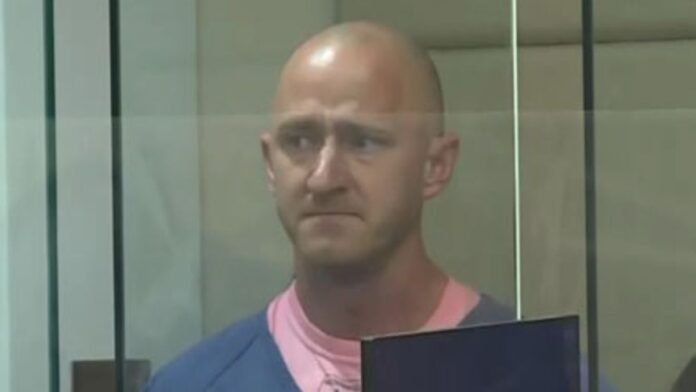


An ex-pilot formerly with Alaska Airlines narrowly escaped imprisonment after attempting to disable a passenger jet’s engines, expressing gratitude toward the flight crew for restraining him during the incident. Joseph Emerson, who was off-duty and occupying an additional seat in the cockpit, made the dangerous move on a Horizon Air flight from Everett, Washington, to San Francisco on October 22, 2023. The crew managed to subdue him, diverting the plane to Portland where it landed safely with over 80 passengers.
US District Court Judge Amy Baggio sentenced Emerson to time served and three years of supervised release during a hearing in Portland, Oregon. Federal prosecutors had pushed for a one-year prison term, while his defense team had requested probation. Judge Baggio acknowledged the fallibility of pilots, emphasizing the need for support when necessary.
Emerson confessed to feeling despondent following a friend’s death, having consumed psychedelic mushrooms two days prior, and enduring over 40 hours without sleep. He claimed he thought he was dreaming and attempted to activate the plane’s fire suppression system by pulling two red handles to jolt himself awake.
Before the sentencing, Emerson expressed remorse for his actions, acknowledging the harm caused to society. His wife and supporters spoke on his behalf, highlighting his growth and positive response to the ordeal. Emerson had previously pleaded guilty or no-contest to all charges, including interfering with a flight crew and endangering others.
Following his release from custody, Emerson was required to undergo mental health services, abstain from drugs and alcohol, and stay away from aircraft. He received a 50-day jail sentence with credit for time served, probation, community service, and restitution to Alaska Air Group.
His community service, including piloting a health nonprofit he founded, was part of his rehabilitation plan. Emerson must also comply with drug and alcohol assessments, avoid unprescribed substances, and maintain distance from operational aircraft without probation officer approval.
Federal prosecutors praised the flight crew for preventing a potential disaster, emphasizing the critical role they played in averting casualties. Emerson expressed gratitude to the crew for saving his life and those aboard, recognizing the incident as a catalyst for personal growth and self-improvement.
The incident raised concerns about cockpit safety and the mental well-being of individuals authorized to enter such areas, prompting a renewed focus on ensuring the fitness of those in aviation roles.