
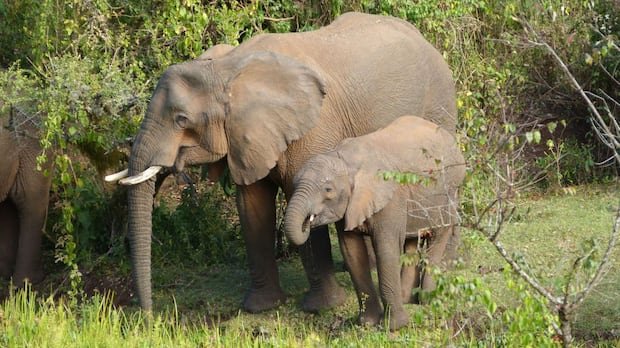


In an interview with scientist Elodie Freymann, intriguing reports emerged about African elephants in Kenya’s Mount Elgon region utilizing medicinal plants. These elephants were observed chewing on tree bark known for its traditional medicinal properties and even incorporating medicinal plants into their diet, particularly mothers feeding them to their offspring.
Freymann, who delves into self-medication among animals, expressed her lack of surprise at the elephants’ behavior, highlighting the intelligence and complexity of elephant societies. The study she co-authored, recently featured in the journal Nature, reveals insights from local knowledge, showcasing several dozen medicinal plants favored by Mount Elgon elephants.
The research sheds light on the sophistication of elephants as intelligent beings and emphasizes the necessity of conserving the biodiversity crucial for their well-being. Despite these fascinating findings, scientists urge further investigation to definitively confirm whether elephants are indeed engaging in self-medication.
Based on interviews with long-time members of the Sabaot community intimately familiar with the elephants, the study details instances where elephants seek out specific plants when feeling unwell or mothers pass on medicinal plants to their young. Remarkably, out of the 35 plants identified, 34 have traditional medicinal uses locally, with eight of the most common plants validated for their pharmacological properties.
Acknowledging the value of local perspectives, Freymann emphasized the importance of integrating indigenous knowledge into scientific research. While the study presents a promising starting point, elephant ecologist Chase LaDue, unaffiliated with the research, cautioned that more evidence is necessary to establish intentional self-medication among elephants.
The narrative of elephants consuming medicinal plants has sparked curiosity, prompting the deployment of cameras to capture elephants in the act. This next phase of the research aims to scrutinize the footage for conclusive evidence. If proven, elephants would join a roster of animals, including chimpanzees, great apes, insects, and birds, known to engage in self-medication practices.
As the discourse on animal self-medication gains momentum, the significance of preserving biodiversity to safeguard animals’ access to essential medicines becomes even more critical in a rapidly changing environment.