
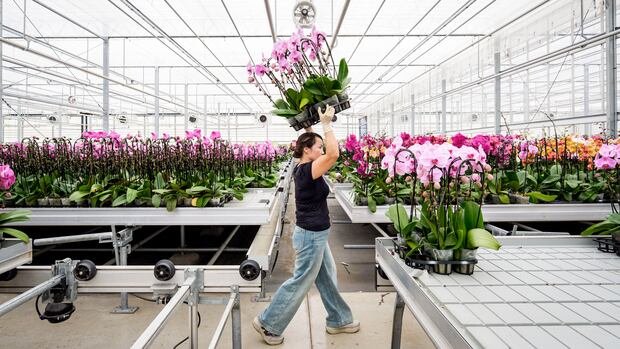


A fresh set of U.S. tariffs is looming over Canadian enterprises in the absence of a Canada-U.S. trade agreement. The potential impact under Section 338 of the Smoot-Hawley Tariff Act could target approximately $20 billion US worth of Canadian imports, spanning various products from electronics to furniture to orchids.
CBC photographer, Evan Mitsui, recently engaged with a third-generation orchid grower, Guann Chen, and a furniture manufacturer in Ontario to delve into their apprehensions. Guann Chen operates Orchid Greens, a prominent orchid farming business in St. Catharines, Ontario, situated within the heart of Niagara’s greenhouse hub. While his orchids are distributed through major Canadian retailers like Loblaws, T&T, and Metro, nearly half of his production caters to the U.S. market.
Chen expressed grave concerns about the potential impact of tariffs on Canadian-grown plants, emphasizing the intricate nature of orchid cultivation that cannot swiftly adapt to changes in suppliers. He highlighted the strategic advantage of the Niagara region’s proximity to the U.S. border, enabling the concentration of years of greenhouse expertise into a lucrative export industry valued at hundreds of millions of dollars.
Meanwhile, Lind Furniture, a veteran upholstered furniture manufacturer based in Woodbridge, Ontario, faces a similar predicament. Despite a longstanding partnership with Costco, a substantial portion of its business hinges on cross-border trade with small and medium-scale U.S. retailers. The company’s general manager, Michael Saifer, lamented the uncertainty surrounding the tariff situation, citing operational challenges and workforce adjustments.
The repercussions of the tariff uncertainty have already reverberated within Lind Furniture, leading to disrupted supply chains, staff layoffs, and production delays. Rising costs of essential components like steel fasteners and premium hardwoods further exacerbate the strain on the furniture maker’s operations.
Both businesses underscore the detrimental impact of the tariff ambiguity, emphasizing the critical need for clarity and stability in the trading environment to safeguard their longstanding operations and preserve jobs in their respective industries.