


An Arctic chill is on the horizon for Brits in the upcoming weeks, with temperatures expected to drop to -2C and the possibility of freezing rain and snow. Following a relatively mild period earlier this month, weather conditions have turned colder and more unsettled due to low-pressure systems moving in from the Atlantic. While some snowflakes may appear over elevated areas this week, the real cold snap is anticipated in November.
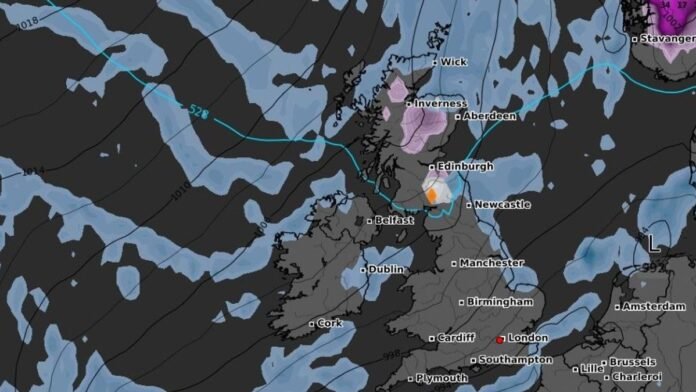
According to WXCharts maps, temperatures are projected to dip into single digits in the first week of November, dropping to below zero by November 12, particularly in Scotland, where temperatures could reach -2C. A map for midnight on November 11 indicates snowfall in central and southern Scotland, along with a region marked with freezing rain warnings.
Freezing rain poses a significant danger for driving as it can quickly form a layer of ice on surfaces. The Met Office defines it as a rare form of liquid precipitation that freezes upon contact with cold surfaces. This ice accumulation can be weighty enough to cause tree and power line damage, turning roads into hazardous icy surfaces and affecting aircraft operations.
The Met Office’s forecast suggests the likelihood of overnight fog and frost from mid to late November. The early forecast for November 11 to 25 predicts unsettled conditions with showers or prolonged rainy periods and potential strong winds, although temperatures are expected to remain near average.
Towards the latter part of November, the weather is likely to trend towards drier and calmer conditions, interspersed with occasional fog and frost overnight. Any wetter spells are anticipated to affect northern regions more significantly.
The initial days of November are anticipated to bring further unsettled weather with heavy rain and the possibility of severe gales. The Met Office anticipates continued low-pressure systems dominating the UK and surrounding areas, leading to periodic showers or prolonged rainy periods. Western regions are expected to receive the highest rainfall amounts, while intermittent drier intervals may occur, particularly in the east. Strong winds, including gales, are also probable, with temperatures likely to be above average initially, reducing the occurrence of overnight frost and fog compared to usual conditions.