
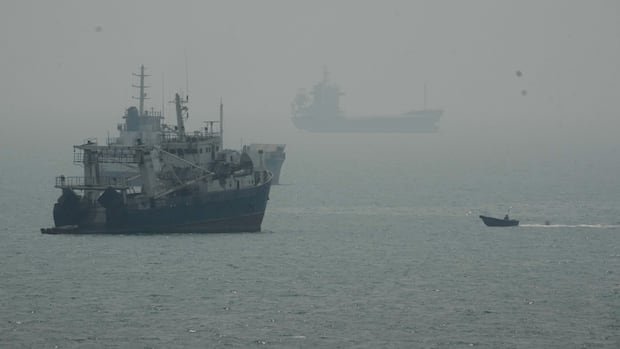


Iran reported on Wednesday that it had engaged in an assault on 10 vessels near the Strait of Hormuz in retaliation for the sinking of five Iranian oil tankers by the U.S. This marked the largest series of back-and-forth attacks on shipping by both parties since the commencement of the six-month-old conflict. The Islamic Revolutionary Guard Corps (IRGC) of Iran claimed responsibility for launching a ballistic missile strike on a U.S. military base near Al Azraq in eastern Jordan. Additionally, they stated that they had targeted two U.S. ships and eight oil tankers trying to traverse a restricted area of the Strait of Hormuz.
The incidents in and around the crucial water passage led to a surge in oil prices, with the international Brent crude benchmark surpassing $100 per barrel for the first time since July. The fluctuating combat between Saudi Arabia and the Iran-aligned Houthis in Yemen has further destabilized energy markets. The Houthis recently conducted an attack on four cities in Saudi Arabia, resulting in significant fires at oil facilities. This turmoil in the region has caused disruptions in oil supply and impacted global markets.
Consumers in the U.S. experienced rising fuel costs, with the average price of a gallon of regular gasoline reaching $4.15, a 26% increase from the previous year. Diesel prices soared to $5.90 per gallon, marking a 59% surge compared to the same day last year. The escalating tensions have contributed to the uncertainty in the energy sector, prompting concerns among analysts about the prospects of a resolution before the upcoming midterm elections.
Amidst the conflict, Iran declared an extended maritime restricted zone from Chabahar in Iran into parts of the Gulf of Oman and the Arabian Sea. This move follows Iran’s announcement to establish a restricted zone outside the Strait of Hormuz. The region witnessed further incidents, including a drone strike on a tanker carrying Iraqi fuel oil in Iraqi waters. The United Kingdom Maritime Trade Operations agency reported disabling fire on vessels in the northern Gulf and Gulf of Oman during military activities.
Iran’s actions have disrupted the flow of oil through the vital Strait of Hormuz, impacting global oil trade and supplies. In response, the U.S. implemented a military blockade of Iranian ports to mitigate the effects of Iran’s restrictions. The situation remains volatile, with ongoing clashes and threats posing challenges to regional stability and energy security.
The recent developments underscore the complex geopolitical dynamics in the Middle East and the far-reaching consequences of the conflict on global energy markets and economic stability.