
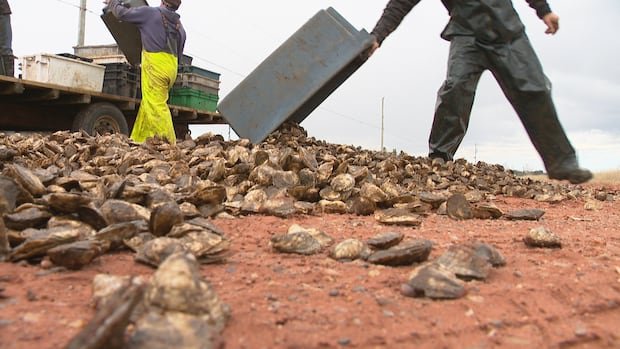



While tending her oyster farm in western P.E.I., Kaila Richard reminisces about her late father, who tragically passed away in 2021. Alongside her husband Bruce Richard, they now manage the farm in Dock River near Alberton.
Reflecting on their efforts to upgrade the farm with loans and modern equipment, the Richards face a dire situation as two diseases threaten the island’s oyster industry.
Witnessing numerous dead oysters being pulled up, Bruce described the current state as a “massacre,” with many farmers experiencing substantial losses due to the diseases’ impact.
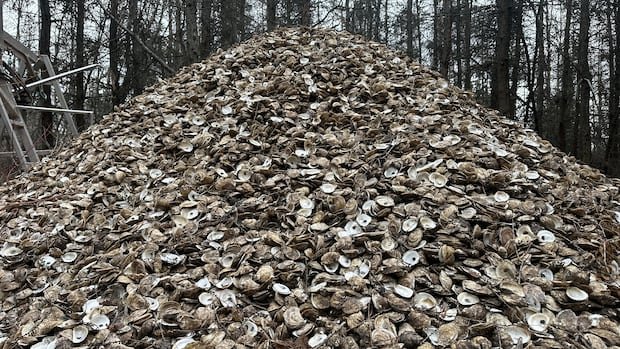
Multiple oyster growers in western P.E.I. are facing complete loss in their cages due to the diseases affecting the industry. The island grapples with the devastating impact of MSX and dermo diseases. CBC’s Nancy Russell provides insights.
The diseases, multinucleate sphere unknown (MSX) and dermo, were first identified in P.E.I. waters in 2024 and 2025, respectively. Despite being harmless to humans, these parasites have caused significant mortality rates among oysters, leading to severe repercussions for growers.
Both the provincial and federal governments have introduced support initiatives, including financial aid, mental health resources, and the approval for importing disease-resistant oyster seed to revitalize oyster stocks. However, the process of cultivating these seeds takes a minimum of three years, with uncertain outcomes.
Farmers emphasize the urgent need for continuous financial backing to sustain their businesses during this challenging period.
Jeff Noye, an oyster grower and mayor of Tyne Valley, highlights the cultural significance of oyster farming on the island, expressing concerns about potential corporate takeovers if adequate support is not provided.