
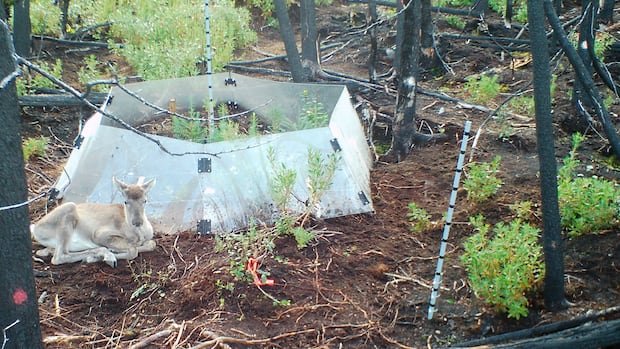


Lucas Brehaut, a wildfire researcher with the Canadian Forest Service, faced unexpected challenges in his study on forest regrowth post wildfires in Atlantic Canada. His research involves using open-top chambers (OTCs) to simulate warmer temperatures and observe seedling growth. However, his equipment has been repeatedly damaged by various wildlife inhabitants, including caribou, moose, black bears, wolves, rabbits, and owls.
Despite the setbacks caused by the animals’ curiosity and grazing habits, Brehaut remains understanding and acknowledges that his research takes place in their natural habitat. He reflects on the joy the animals might experience interacting with his equipment, even if it disrupts his work.
Kaitlyn Gaynor, an assistant professor at the University of British Columbia, explains that animals, like bears, are naturally inquisitive about new objects in their environment, often driven by the possibility of food. Additionally, our human scent left on equipment can attract animals. Gaynor suggests minimizing human impact by reducing scent, quickening fieldwork, and camouflaging equipment.
Animal interference in research is a global issue, with Gaynor sharing her experiences in Mozambique where baboons, hyenas, and elephants have disrupted research activities. Elephants, in particular, pose a significant challenge due to their intelligence, curiosity, and destructive behavior towards equipment.
While wildlife interference is a common occurrence, Brehaut also faces challenges from human activities, such as snowmobiles damaging his research sites during snowy winters in Newfoundland. Despite these obstacles, researchers like Brehaut continue their vital work, adapting to and respecting the natural world they study.