
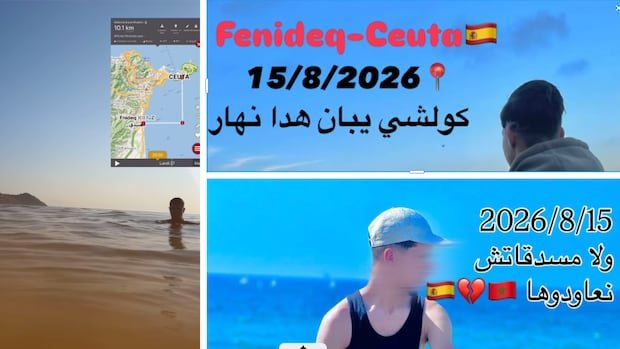


In the lead-up to the recent surge of migrants arriving in Europe, a brief Instagram video went viral, amassing 1.4 million views. The video depicted a young man partially submerged in water, followed by a view of land in the distance with a mapped sea route from Fnideq, Morocco, to Ceuta, a Spanish enclave in North Africa. The post claimed arrival in Ceuta, sparking discussions in the comments section.
This video was just one of many posts on platforms like Instagram and TikTok that seemed to have influenced two waves of irregular migration from Morocco to Ceuta. These online communities focused on migration-related content such as music, memes, and imagery, potentially exploiting the aspirations of African and Middle Eastern youth seeking better opportunities abroad.
There is ongoing debate among governments and organizations about whether a single entity orchestrated the events in Ceuta or if migration was used for geopolitical purposes. Nevertheless, misinformation spread through various online channels played a significant role in driving the influx of migrants towards Ceuta this summer.
CBC’s visual investigations team, with help from Bellingcat’s Sebastian Vandermeersch, identified numerous social media accounts, primarily on Instagram, active before the initial wave on July 30. False information suggesting Spain’s stance on maritime migrant arrivals triggered a surge in posts, leading to over 72,000 people crossing into Ceuta and creating a political crisis.
While a majority of those who crossed in July returned to Morocco, around 5,000 remain in Ceuta, with some sadly losing their lives during the journey. The power of misinformation to influence real-world actions, particularly among vulnerable populations seeking hope, has been evident in this situation.
Social media accounts directed followers to WhatsApp groups for planning crossings and provided guidance on reaching Ceuta. Some posts highlighted specific crossing points, while others offered entry advice for a fee. In response to these events, Meta and TikTok agreed to fact-check content to prevent criminal exploitation through misinformation.
A subsequent surge in posts before August 15 hinted at another potential crossing opportunity, with accounts from the previous wave resurfacing alongside new ones. Morocco and Spain prepared for this wave, with heightened security and arrests made to deter unauthorized crossings.
The appeal of these messages lies in the growing success of migrants reaching Ceuta, coupled with economic challenges and political disillusionment in their home countries. The surge in migration-related content resonates with young people facing limited opportunities, portraying migration as a path to a better life.
Accounts originating from North African countries like Morocco and Algeria, as well as Italy and Turkey, lure followers with images of European destinations without explicitly promising a way to get there. The use of aspirational language and imagery continues to attract a significant audience, despite the risks and uncertainties associated with irregular migration.
These accounts, with changing usernames and strategic posts, tap into the desire for better prospects abroad, painting immigration as a quest for opportunity and a new beginning. Despite attempts to reach out to these accounts for clarification, responses have been elusive, underscoring the complex nature of the online migration narrative.