


Montreal Police Expand AI-Powered Surveillance Network, Prompting Privacy Concerns
Montreal police have quietly expanded their utilization of AI-driven technology to monitor vehicles and individuals throughout the city, sparking inquiries regarding transparency and privacy rights.
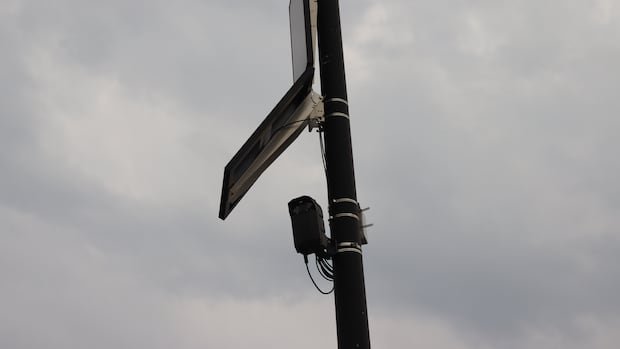
Recently, a high-tech camera capable of scanning and identifying vehicles was discovered by a Radio-Canada journalist attached to a lamppost along Henri-Bourassa Boulevard in Montreal’s Rivière-des-Prairies district. Following media coverage, the camera, a Cloudrunner CR-H2 manufactured by Montreal-based Genetec, was promptly removed.
In a statement, the Service de police de la Ville de Montréal (SPVM) confirmed the device’s identity. Similar to the controversial Flock Safety cameras in the United States, the Genetec system not only scans license plates but also records specific vehicle details like color, make, and model.
Unlike the Flock system, which shares data in a central database accessible to multiple agencies, Genetec’s approach involves the operator managing collected information. SPVM spokesperson Marc-Antoine Bélanger clarified that access to captured images is restricted to investigators overseeing relevant cases.
Bélanger explained that the camera’s removal aimed to protect ongoing investigative strategies. He emphasized that the SPVM keeps its technological tools confidential to avoid compromising complex investigations.
Despite claims by the SPVM, privacy advocates argue that the implementation of new technology lacks transparency. Dominique Peschard from the Ligue des droits et libertés, a Quebec human rights group, stressed the importance of informing the public about the tools used by law enforcement without jeopardizing their work.
The use of Cloudrunner cameras is part of the SPVM’s broader adoption of AI technology. The department confirmed its use of iMotion ROC AI software from Rank One Computing to assist in analyzing extensive video footage. SPVM spokesperson Anik de Repentigny clarified that the software’s facial recognition and biometric features are not utilized, highlighting its focus on identifying specific elements within video content.
Furthermore, an internal privacy impact assessment acknowledged potential civil liberties risks associated with the technology, including the inadvertent investigation of innocent individuals and discriminatory practices. The SPVM assured that measures were in place to minimize discrimination, such as configuring the software to search for objects rather than identifiable traits like ethnicity.
In response to concerns raised about oversight, SPVM Chief Fady Dagher confirmed the use of the Cloudrunner camera for targeting armed violence and vehicle thefts. Peschard expressed surprise at Dagher’s initial lack of awareness of the technology, emphasizing the need for proper supervision of investigative tools to safeguard individuals’ privacy.
While a single camera was discovered and removed, the SPVM hinted at the possibility of deploying additional cameras based on investigative requirements. Genetec’s vice-president, Andrew Elvish, assured that privacy considerations were integral to the technology’s design, with all data interactions logged.
In light of these developments, calls for stringent restrictions on the use of such surveillance tools have intensified to prevent the erosion of individual privacy in public spaces.