
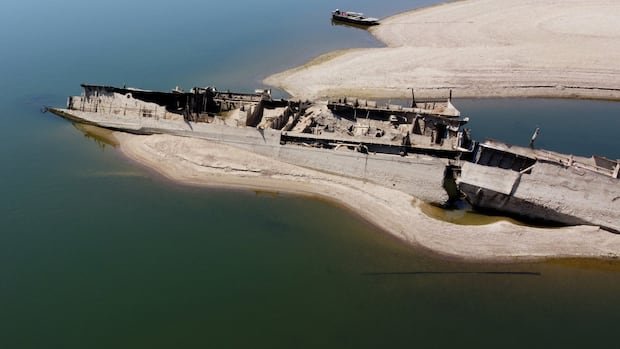


In a visible indication of the prevailing scorching weather conditions in Europe this summer, Nazi German warships submerged in the Danube River during World War II are resurfacing as water levels drop due to the extreme heat and drought. The fifth heat wave in western Europe since May is expected to intensify starting Tuesday, with temperatures nearing 40 degrees Celsius in Spain, France, and Italy, before further rising in central and northern Europe.
The Copernicus climate monitoring service of the European Union has confirmed that June and July recorded the highest temperatures on record in western Europe. The sweltering heat has led to around 25,000 heat-related deaths, with devastating wildfires and record-low water levels in significant waterways like the Danube.
Climate scientists emphasize that the exposed warship wrecks are symbolic of a broader issue: the exacerbation of heat and drought due to fossil fuel-driven climate change. According to Richard Allan, a climate scientist at the University of Reading in England, the current extreme weather conditions are just the beginning of the adverse impacts of global warming.
Historians estimate that the Nazis scuttled nearly 200 warships near the Serbian city of Prahovo in September 1944 to impede advancing Soviet forces. However, the receding waters have revealed more wrecks this year, including a German military motorcycle in Hungary and an unexploded British bomb in Slovakia. The drying Danube has also unveiled ancient mammoth remains in Bulgaria.
The diminishing water levels in the Danube have raised urgent concerns for countries along the river’s course, impacting various sectors such as agriculture, energy, and transportation. Governments have implemented measures to mitigate the effects, including restrictions on water use for irrigation and operational adjustments at nuclear power plants to cope with cooling challenges.
The significant rise in temperatures and the reduced water levels in the Danube are clear indicators of climate change impacts. Samantha Burgess, strategic lead for climate at Copernicus, emphasized how heatwaves and droughts are intensifying due to climate change, leading to a reinforcing cycle of extreme weather events.
As climate change continues to worsen, experts warn that the effects will escalate in the future. Allan highlighted the potential for unprecedented global temperatures in the coming years if greenhouse gas emissions persist at current rates. The ongoing environmental challenges underscore the critical need for sustainable resource management and climate action to mitigate the impacts of climate change.