
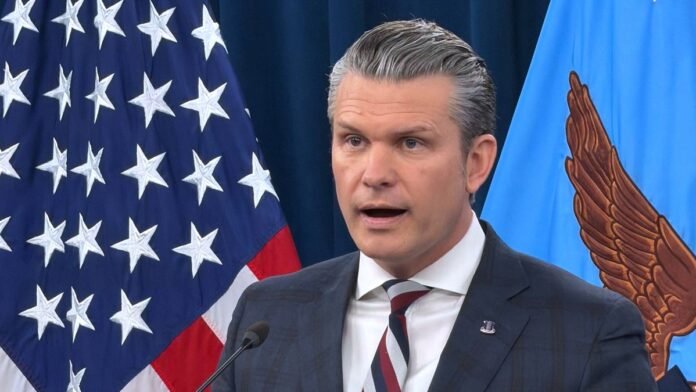


Recent reports suggest that a key Iranian figure, allegedly involved in a plot to target Donald Trump, has been eliminated by the United States, adding another layer to the ongoing global conflict.
According to the Defense Secretary known as “Pistol” Pete Hegseth, the operation targeted a senior Iranian individual tied to an alleged assassination attempt on the President. Hegseth stated, “The leader of the unit behind the assassination plot against President Trump has been tracked down and eliminated. Iran’s attempt was thwarted, with President Trump emerging victorious.”
This announcement, delivered with a hint of arrogance, comes amidst a US-led military campaign against Iran, now accompanied by an additional rationale, further complicating the origins of the conflict. The lack of a consistent explanation remains a notable challenge for the administration.
Since the commencement of hostilities, various justifications have been put forth by the White House and senior officials, lacking a unified narrative. The shifting reasons range from concerns over Iran’s nuclear program to preemptive strikes, safeguarding allies, countering Iranian proxies, and restoring US influence in the Middle East.
The latest addition to the list of motives is retaliation for an alleged plot against Trump, highlighting a personal dimension to the conflict as emphasized by the President himself.
Trump’s remarks following the elimination of Iran’s Supreme Leader, Ayatollah Ali Khamenei, were succinct yet revealing, encapsulating the strategic decision in personal terms. “I acted first,” he declared, underscoring the individualistic approach to international conflict.
While such rhetoric may resonate with supporters valuing strength and retribution in geopolitics, recent polls indicate growing skepticism even among Trump’s base in the US, questioning the true motives behind the war.
The evolving justifications presented by officials encompass a range of factors, from nuclear risks to regional security, leadership targeting, and historical grievances, collectively forming a broad rationale that appears more diverse than strategic.
Amidst the confusion surrounding the war’s objectives, the campaign has been described alternatively as a tactical strike, a military degradation effort, or a broader geopolitical realignment endeavor, illustrating a lack of clarity in the end goals.
Hegseth’s recent appearance further exemplified the tone of the administration, combining the news of the Iranian figure’s demise with claims of Iranian naval destruction, showcasing a mix of bravado and military prowess.
However, the spectacle of military achievements, including the sinking of an Iranian warship, while visually impactful, raises questions about the overall strategy and coherence of the campaign.
The narrative surrounding the conflict often