
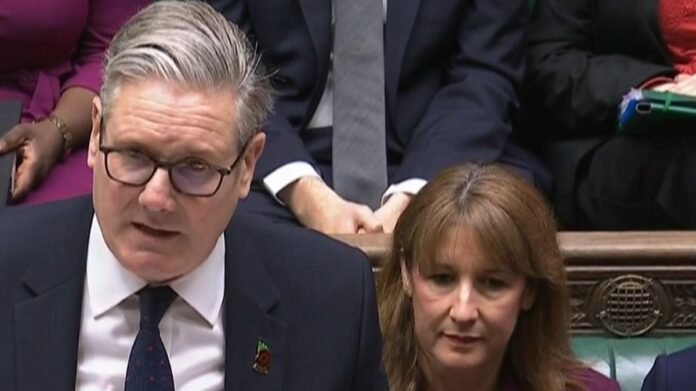


Keir Starmer did not dismiss the possibility of raising income tax beyond what was promised in the Labour Party’s manifesto during the upcoming Budget session, as revealed during PMQs. While the Prime Minister assured that there would not be a return to austerity measures, he refrained from reiterating the specific tax commitments made by Labour in the last General Election.
When questioned by Conservative leader Kemi Badenoch during PMQs about the previous tax promises, Starmer evaded a direct response, indicating that the government’s tax plans would be disclosed at Chancellor Rachel Reeves’s Budget presentation on November 26.
In response, Badenoch highlighted Labour’s pledge from the previous manifesto not to increase income tax, national insurance, or VAT. Starmer deflected by focusing on positive economic indicators such as increased retail sales, lower inflation, upgraded growth projections, and a thriving stock market. He emphasized that the Budget announcement would outline plans for fostering economic growth, reducing NHS waiting lists, and securing a brighter future for the nation.
Post-PMQs, the Prime Minister’s press secretary declined to reaffirm the manifesto’s commitment to shield working people from certain tax hikes, emphasizing that the Budget details would be revealed on November 26 after the Office for Budget Responsibility finalizes its forecasts.
Recent reports suggest that Chancellor Rachel Reeves is contemplating an income tax increase to address a substantial budget deficit. One proposal being considered is adding 1p to the basic income tax rate, potentially generating around £8 billion in revenue. Additionally, there is speculation about a potential hike in higher income tax rates during the Budget announcement, targeting individuals earning above certain thresholds.
The Treasury declined to comment on these speculations, emphasizing that they do not engage in discussions regarding potential tax adjustments until official announcements are made.