


The government’s credibility has long been questioned, given the tendency to manipulate information for public consumption. Despite the prevalence of spin in official communications, there is usually an element of truth in the messages, albeit presented in a favorable light. However, the current administration led by Donald Trump has taken a different approach. Recent incidents involving false narratives, such as labeling an unarmed woman in Minnesota as a “domestic terrorist” and fabricating an image of a US citizen under arrest for protesting, have eroded trust in the administration’s statements. This pattern of deceit has led to widespread skepticism, prompting the public to view White House communications with suspicion unless substantiated. The media’s vigilance in verifying information from the government remains crucial in the current climate.
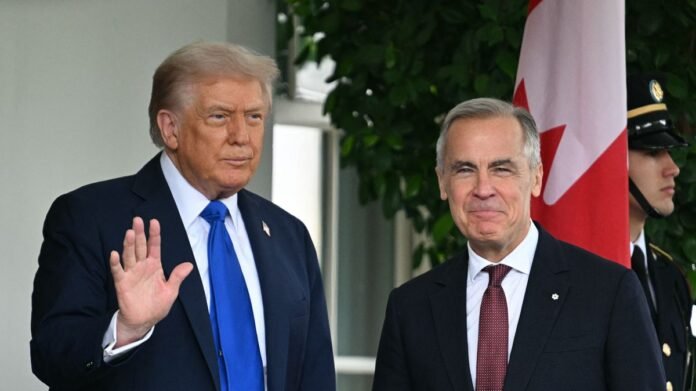
Amidst the ongoing trade disputes, President Trump issued a stark warning to Canada, threatening a 100% tariff if the country proceeds with a trade agreement with China. The President’s social media post targeted Canadian Prime Minister Mark Carney, cautioning against turning Canada into a conduit for Chinese goods entering the US market. Despite previous positive remarks on trade deals, Trump’s stance reflects a shift in relations. The tensions escalated as Carney was excluded from Trump’s Board of Peace, leading to a public exchange of contrasting views on national interests. The involvement of music icon Sir Rod Stewart in advocating for an apology from Trump over disparaging remarks about troops in Afghanistan added a notable voice to the conversation.
In a peculiar turn of events, the White House shared an altered image featuring Trump and a penguin in Greenland, prompting ridicule for its geographic inaccuracy. The administration’s continued dissemination of misleading content, including a fake depiction of a protest arrest, has raised concerns about the manipulation of visual narratives. Despite criticisms, the White House remained defiant, emphasizing enforcement over accuracy in its messaging. Concurrently, civil unrest unfolded in Minnesota, with clergy members arrested for protesting immigration policies, highlighting the contentious landscape of social justice activism.
Amidst growing scrutiny, an FBI agent resigned over concerns about the handling of an investigation into a fatal shooting, underscoring internal tensions within law enforcement agencies. The release of autopsy reports and the removal of a slavery exhibit at a historical site stirred controversy over historical revisionism and accountability. The public outcry over the erasure of painful historical truths underscored the importance of preserving a comprehensive narrative of the nation’s past. As stakeholders navigate contentious issues, including trade disputes and social justice advocacy, the call for transparency and integrity in governance remains paramount.