
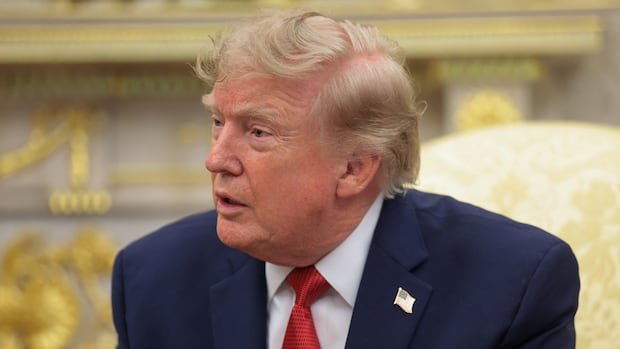


U.S. President Donald Trump has once again issued a warning to Oman as Iran announces collaboration with the Gulf state on a strategy to oversee maritime traffic in the Strait of Hormuz. Reestablishing full access to the water passage remains a key request from the United States.
Simultaneously, the 60-day negotiation window to broker a peace agreement between the U.S. and Iran was nearing its end, with no mention of an extension and both parties seemingly as far apart as they were at the beginning.
The latest updates on Monday in the U.S. and Israel-Iran conflict are as follows:
**Iran Progressing Towards Agreement with Oman**
Iran disclosed that it has struck a deal with Oman concerning the transit of ships through the Strait of Hormuz, which connects the two nations. Efforts are underway to finalize the specifics for a joint statement. Iranian Foreign Ministry spokesperson Esmail Baghaei informed journalists in Tehran that they have agreed on the transit route map.
While specifics were not provided, preliminary information indicates that the arrangement would allow ships to pass through the strait, entering near Iran and exiting close to Oman, without incurring tolls during an interim period. The U.S. has been seeking a viable agreement for reopening the strait before lifting its embargo on Iranian ports.
Following the attacks by Israel and the U.S. on Iran on Feb. 28, Iran effectively shut down the strait, a critical route through which approximately one-fifth of the world’s oil trade transited.
**Prior Threat by Trump Directed at Oman**
In an interview with Fox News reporter Trey Yingst, Trump mentioned that the U.S. would strike Oman if it obstructed operations, using strong language to emphasize the point. This is not the first instance of Trump threatening Oman. He previously stated during a cabinet meeting in May that “Oman will behave like everyone else, or we will have to take action.”
Trump dismissed the significance of the 60-day deadline for peace talks, asserting there was no set timeline. He also disclosed the existence of a back channel for discussions with the Islamic Revolutionary Guard Corps.
United Nations Secretary General António Guterres has called for the resumption of peace talks between Iran and the U.S., highlighting the absence of a military solution and the necessity to reduce recent escalations in rhetoric.
**Houthi Rebels Claim Responsibility for Attacks**
Yemen’s Houthi rebels, backed by Iran, asserted responsibility for an assault on a ship and four military vessels in the Red Sea near Mokha, Yemen, adjacent to the strategic Bab el-Mandab Strait. The rebels launched ballistic missiles at the vessels, causing them to capsize and catch fire, as reported by Yahya Saree, a Houthi military spokesperson.
Attributing the vessels to Saudi Arabia without presenting evidence, the rebels’ claim has not been independently verified. Additionally, the rebels conducted a drone attack on government forces in Marib province.
**Drone Strikes Target Iraqi Officials**
Northern Iraq encountered drone attacks against two officials, reportedly launched from the Iranian border, as per the regional counterterrorism service. The targets included the office of Masrour Barzani, the Prime Minister of Iraq’s northern Kurdish region, and the residence of a senior regional intelligence official.
No casualties were reported, and no group claimed responsibility for the attacks. Amid escalating tensions, Iran and Iranian-backed Iraqi factions have been conducting regular assaults on U.S. military and diplomatic sites in Iraq, with Monday’s direct attack on regional government installations marking a departure from previous incidents.
As U.S. forces prepare to withdraw from the Kurdish region of Iraq by the agreed-upon deadline of Sept. 30, tensions continue to escalate in the region.