
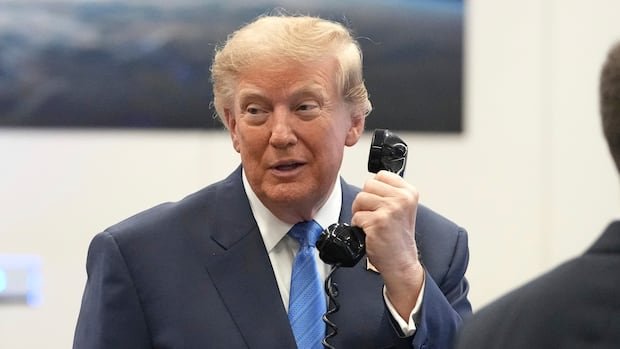


U.S. President Donald Trump announced on Friday a significant agreement with Venezuela that could potentially grant the U.S. access to vast untapped oil reserves in the South American nation at a favorable cost. The agreement, negotiated by U.S. Secretary of State Marco Rubio, U.S. Secretary of War Pete Hegseth, and Venezuela’s interim President Delcy Rodríguez, aims to develop 17 fields with an estimated potential of 65 billion barrels.
According to Rodríguez’s government statement, the deal could attract $100 billion in investment to Venezuela’s oil industry and generate over $209 billion in taxes for Caracas. The agreement allows the United States to collaborate with an undisclosed private operator in Venezuela to establish a new private company to manage the reserves. The company would be granted 100-year rights to develop the oil fields.
Under the terms of the deal, the U.S. would have a 55% effective output share in the new private company, including ownership rights and the ability to purchase oil at cost. This would position the company as the second-largest corporate holder of proven reserves globally, following Saudi Aramco.
The announcement of the agreement comes after the U.S. military, under Trump’s directive, conducted an operation nine months ago to apprehend Venezuela’s then-president Nicolás Maduro for federal narcoterrorism and drug trafficking charges.
As gas prices in the U.S. continue to rise amid ongoing tensions in Iran, Trump is under increasing pressure to address the situation. The conflict has led to a slowdown in Gulf oil transportation through the Strait of Hormuz, affecting global petroleum flow. Despite the high gas prices, a substantial drop is not expected immediately, as experts caution that enhancing Venezuelan oil production will be a gradual process requiring significant time and investment.
Following Maduro’s removal from power, Trump urged oil executives to re-enter Venezuela, aiming to capitalize on the nation’s oil resources. However, skepticism remains among industry leaders due to the country’s political instability and deteriorated infrastructure. Despite past challenges, Trump remains optimistic about stabilizing Venezuela and revitalizing its oil sector.
The agreement is anticipated to bring in billions of dollars in private investment to Venezuela and potentially lower gas prices in the U.S., according to Rubio. The purchased oil would be utilized for filling the U.S. strategic petroleum reserve and military needs. Venezuela, with an estimated 303 billion barrels of crude oil reserves, possesses around 17% of the world’s oil supply. While the country’s oil wealth is well-known, its production capacity remains low due to infrastructure limitations.