
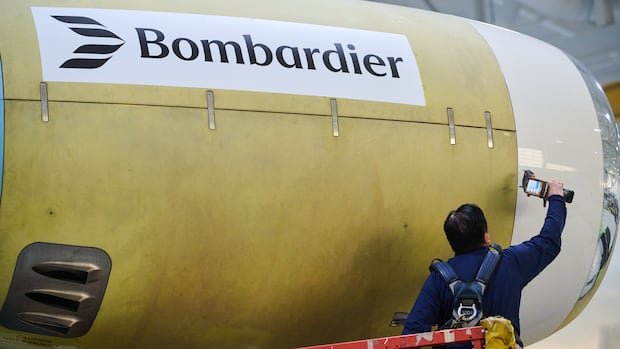


U.S. President Donald Trump has decided not to follow through on his previous threat to prohibit the sale of Bombardier planes in the United States. This move has brought relief to the aerospace industry following recent trade war tensions that led to increased tariffs.
During a campaign rally on Monday night, Trump mentioned that he now sees Bombardier, a Montreal-based business jet manufacturer, in a different light, acknowledging its presence in the U.S. Specifically, in Wichita, Kansas, where over 1,500 workers are employed by Bombardier. Trump expressed his intention to assist the company in resolving any issues, emphasizing the importance of supporting American jobs.
Wichita is home to Bombardier’s defense division and the company has a workforce of approximately 3,500 employees spread across various states including Kansas, Texas, and California.
The President’s shift in stance towards Bombardier comes after a phone call from Kansas Republican Senator Roger Marshall, who is engaged in a closely contested race against Democrat Adam Hamilton. This political battleground in Kansas reflects the current state of affairs as both parties vie for control ahead of the upcoming midterm elections.
In response to Trump’s earlier social media post threatening to block Bombardier sales in the U.S. unless they relocated their operations, the company highlighted its significant contributions to the American economy. Bombardier emphasized that it supports thousands of jobs through its substantial investments and partnerships with American suppliers.
Despite the recent uncertainty surrounding Bombardier’s market access, the company has continued its operations and investments in the U.S., recently inaugurating a skills development center in Wichita as part of its ongoing commitment to fostering high-skilled jobs.
Analysts have noted that the aerospace industry, despite facing challenges such as tariffs, remains interconnected across borders. Bombardier’s products contain a substantial amount of U.S. content, benefiting American suppliers and workers. Blocking Bombardier from the market would have far-reaching negative consequences, impacting revenue, jobs, and disrupting operations for American businesses awaiting Bombardier deliveries.
With Trump’s decision to retract his threat against Bombardier, the company’s shares saw a positive response in the market, reflecting investor confidence. The resolution of this issue is seen as a positive development that removes a significant source of uncertainty within the industry.
This recent episode involving Bombardier is not the first time the company has been at the center of trade tensions, underscoring the complex nature of international trade relations.