
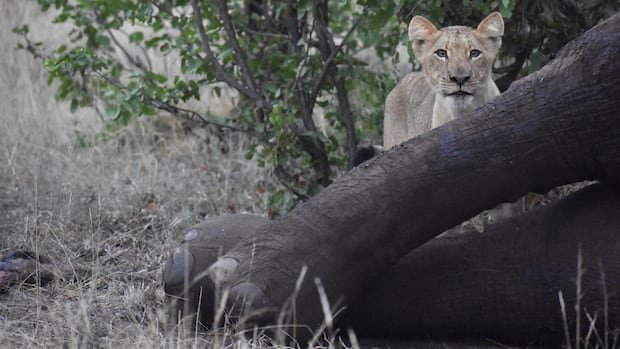



In the vast African savannah, elephants are revolutionizing the concept of life beyond death.
A recent research by an international team of scientists delved into the impact of elephant carcasses on South Africa’s Kruger National Park.
These majestic elephants, often known as “ecosystem engineers”, are recognized for their influence on the savannah while alive, altering the landscape by creating water sources, toppling trees, and consuming vast amounts of vegetation, as previously acknowledged by researchers.
Courtney Reed, the lead author and ecologist, expressed curiosity about the posthumous impact of elephants, emphasizing the significant nutrients present in their bodies like carbon, nitrogen, and phosphorus, and how these nutrients could continue to influence the ecosystem post-mortem.
The study’s findings were recently published in the Proceedings of the National Academy of Sciences of the United States of America. Reed conducted this research during her post-doctoral tenure at the University of California Santa Barbara before joining Princeton University.
A Continuous Cycle of Regeneration
By examining soil composition, biodiversity, and animal behavior around elephant carcasses, researchers discovered that decomposition led to the release of large nutrient reserves into the soil. This sparked soil microbial activity, fostering the growth of nutrient-rich plants that attracted herbivores to the site long after the elephant’s remains had disappeared.
The effects of decomposition persist for over seven years following the elephants’ demise, as per the researchers’ observations.
<p