
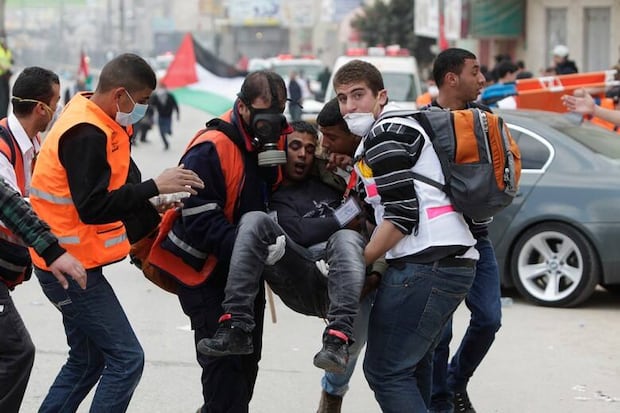


For Yousef Dihir, a paramedic working in the West Bank since 2008, providing care to his fellow Palestinians has become a daily — and at times fatal — challenge.
While leaning against his ambulance in Ramallah earlier this month, he recounted an incident of settler violence he experienced after answering a distress call. This particular event occurred three years ago when his son accompanied him as a volunteer paramedic.
“My son was hurt; we were struck by shards of glass in our faces when gunfire erupted at the ambulance,” he explained. “They fired at both the back and front windows.”
In a report released this week, Physicians for Human Rights Israel (PHRI) indicates that violence against healthcare workers has “increased by 350 percent” from 2022 to 2024 in the West Bank, rising from 93 incidents of violence to 422.
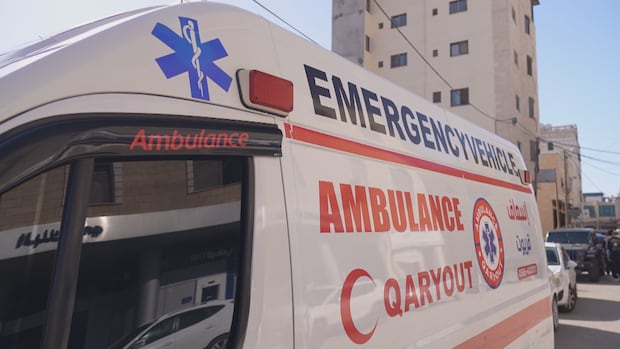
Health-care providers in the occupied West Bank are increasingly subjected to assaults, threats, and intimidation from Israeli soldiers and settlers, as reported by Physicians for Human Rights Israel.
PHRI collected data on violence against healthcare workers by interviewing 25 paramedics, medics, and emergency responders, including Dihir, as well as by shadowing paramedics and ambulance drivers during their shifts to observe how they navigated checkpoints to reach patients.
The organization notes that the spike in violence has been especially pronounced since the Hamas-led attacks on October 7, 2023, which resulted in 1,200 fatalities, 251 hostages, and initiated a catastrophic war in Gaza, leaving much of the territory devastated and its two million inhabitants in desperate circumstances.
Following these events, PHRI states, “restrictions on medical aid under the violent occupation have increasingly devolved into direct assaults by Israeli forces and settlers on emergency medical services.”
They assert that it is evident healthcare workers are being specifically targeted as part of “wider policies that sustain Israel’s unlawful occupation of the West Bank.”
-
Gaza is slowly moving beyond survival mode — 3 years after the war began
-
UN commission says Israel has continued to commit genocide in Gaza since truce
The number of barriers obstructing movement throughout the West Bank has also risen, increasing from 642 in June 2023 to 925 by December 2025.
“Reaching patients, transporting the wounded, and transferring patients between medical facilities are all contingent on approval from the Israeli military,” the report notes.
“Those interviewed reported physical violence, threats with firearms, verbal harassment, humiliating searches, and being barred from accessing injured or critically ill patients.”
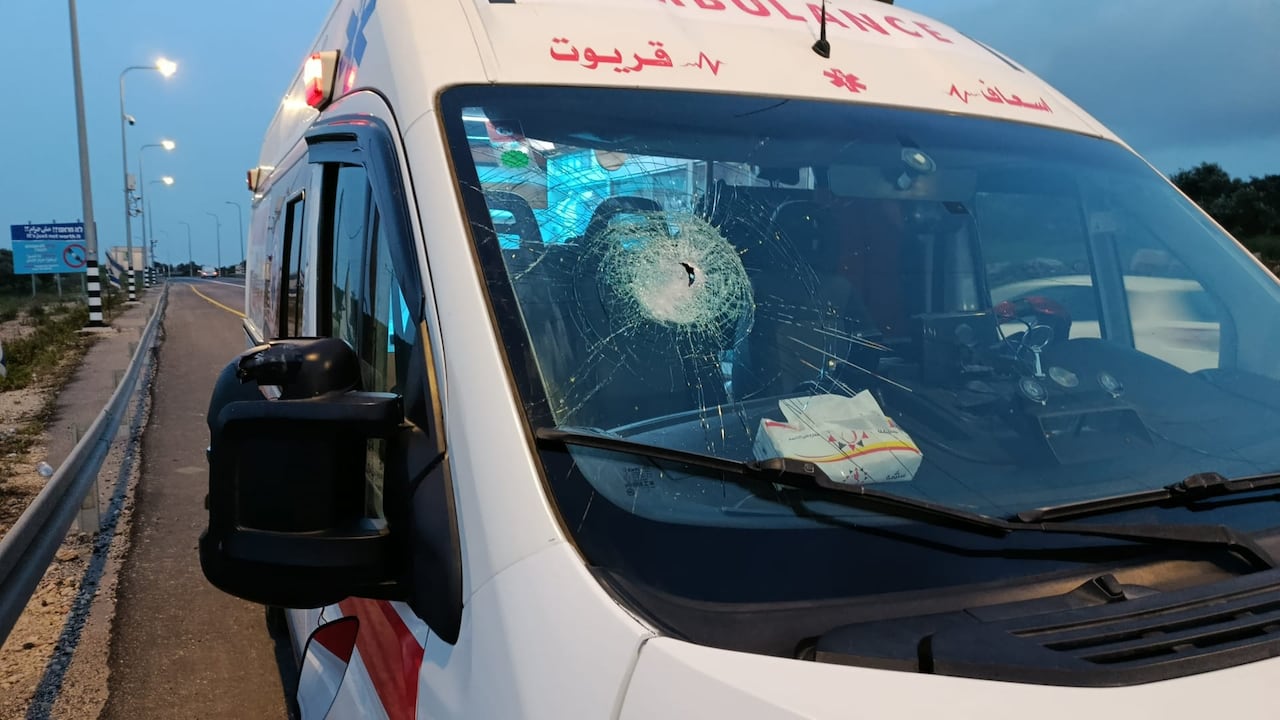
The report indicates a rise in violent confrontations between settlers and paramedics in the West Bank since October 7, 2023. (Bashar Qaryuti/PHRI)
In 2025, the World Health Organization documented 233 attacks on healthcare personnel in the West Bank. Additionally, 38 attacks were reported between January and April 2026, with “35 of those involving obstruction of healthcare.”
Milena Ansari, director of the Occupied West Bank at PHRI, stated during a news conference on November 16 that this constitutes a breach of international law.
Referring to the Fourth Geneva Convention, which ensures the protection of civilians amid armed conflict, Ansari emphasized that Israel is obligated to guarantee medical services and public health access to “the occupied population.”
“This obligation explicitly extends to Palestinian paramedics, ambulances, and emergency medical teams.”
IDF refutes allegations, condemns ‘acts of violence’
The Israel Defence Forces (IDF) refuted claims that their security personnel are hindering medical teams in their duties and “denounced all acts of violence against medical teams and ambulances,” in a statement to CBC News.
The statement asserted, “The IDF facilitates the movement of medical teams throughout Judea and Samaria and coordinates the movement of Palestinian ambulances with the appropriate authorities in advance.”
Ansari responded that this is insufficient.
-
Israeli settler violence at unprecedented levels during Palestinian olive harvest
-
Israeli strike on a Gaza hospital kills 6 people, including surgeon, health authorities say
“We must aim for a high standard by eliminating all checkpoints and barriers that hinder access between Palestinian communities and territories,” she stated.
One paramedic shared an experience of being prevented from reaching an injured individual. “I was right next to the hurt man, capable of reaching him easily, but the soldiers stopped me. He lay there bleeding until he passed away. Only after that were we allowed to assist him,” the paramedic recounted to PHRI.
The United Nations Office for Coordination of Humanitarian Affairs reported that the largest number of violent incidents in the West Bank occurred in 2026, with over 2,000 attacks against Palestinians resulting in fatalities or property damage.
Paramedics ‘perpetually on edge,’ report states
PHRI is urging Israel to put an end to all violence against medical personnel in the West Bank and to guarantee unimpeded access for ambulances through checkpoints, gates, and restricted areas.
They are also calling for an investigation into settler violence and for legal action to be taken against all assaults on medical staff.
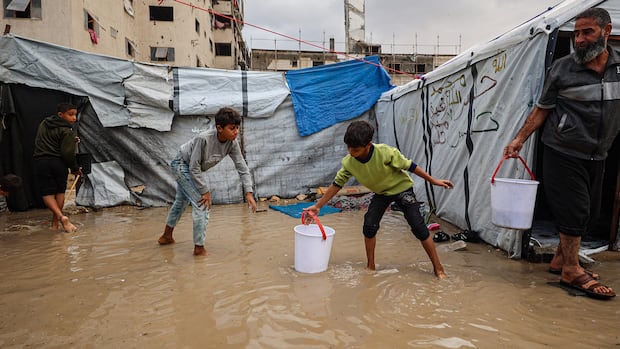
Countries such as Australia, Canada, Italy, and the United Kingdom have co-signed a statement urging Israel to allow immediate and unrestricted humanitarian aid throughout Gaza following severe flooding. Israel claims that over 90,000 tents have entered Gaza as part of a coordinated winterization program.
The PHRI report also highlights the significant psychological impact on emergency workers, with many expressing feelings of distress, anxiety, and sleep disturbances.
“All 25 described being in a constant state of alert, fearing they could be stopped, assaulted, or blocked from attending to patients,” the report states.
Dihir mentioned that one of his colleagues lost his life in April 2023 during a confrontation with settlers.
“He was shot in the head but refused to back down,” he recounted. “He was worried about the injured individuals.” His patients survived the incident.
While Dihir acknowledges he doesn’t wish to perish, he insists he is not fearful.
“I am indifferent to religion, race, ethnicity, or any other factor… My only concern is that a person requires humanitarian assistance and I am able to provide that.”