
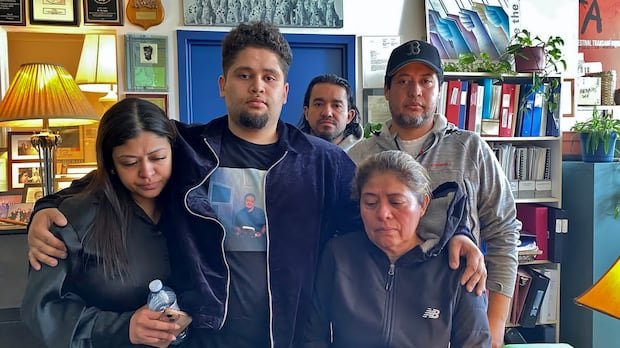


The family of Abisay Cruz is questioning why Montreal police utilized a controversial method of restraint during an incident that led to his death. They express dissatisfaction with the recently issued coroner’s report, which did not clarify why officers employed a technique that the police force claims is not part of their training.
Josué Cruz, Abisay’s brother, emphasized the need to comprehend the use of such force and the handling of Abisay’s condition differently, as he was in distress and required assistance. Abisay, a father and the second youngest among five siblings, passed away on March 30, 2025, following a police intervention in Montreal’s Saint-Michel neighborhood, causing public outcry and deepening mistrust towards law enforcement.
The family witnessed Abisay being restrained, handcuffed, and held down during the incident, leading to profound emotional devastation. The coroner’s report, released recently, deemed Abisay’s death accidental but highlighted the hogtie technique as a likely contributing factor.
The hogtie method involves binding a person’s limbs behind their back while lying face-down. Several police departments have restricted or banned this technique due to safety and human rights concerns. The report mentioned Abisay’s lack of sleep for three days, high levels of cocaine in his system, and the physical restraint as factors in his death.
Despite the fact that Montreal police and the provincial police academy do not teach the hogtie technique, its use in Abisay’s case has raised significant questions about police actions. The family, community organizers, and the coroner have called for a ban on this technique and additional measures for police accountability and handling of crisis situations.
The family seeks transparent answers regarding police training, decision-making processes, and accountability in the tragic events that led to Abisay’s death, urging for a thorough investigation and accountability from the authorities.