
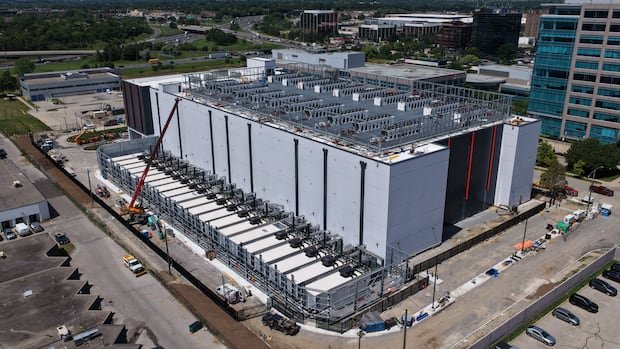


In 2026, artificial intelligence (AI) is widely integrated, prompting concerns among some Canadians about the proliferation of AI data centres in their communities. Canada’s significant investment in AI has led to a surge in planned or proposed AI data centre projects, known for their high water and energy consumption.
Advocates argue that these facilities are crucial for securing Canada’s position as a global AI leader. However, the rapid expansion has prompted certain regions to halt data centre construction temporarily. For instance, Oakville and Mississauga in Ontario have imposed or are considering moratoriums on new data centre projects, triggered by proposals for massive data centres.
Recent town hall meetings in Alberta saw hundreds of attendees seeking clarification from the province’s technology minister regarding AI data centre plans. Additionally, there has been a notable increase in inquiries from CBC readers about the sudden uptick in data centre developments across Canada.
AI data centres differ significantly from traditional data centres due to their larger size and higher energy demands, driven by powerful GPUs. These facilities, often referred to as “hyperscale,” can consume hundreds of megawatts of electricity, dwarfing conventional cloud facilities in scale and energy usage.
The growing demand for AI technologies has motivated Canada to position itself as a global AI hub. The government has allocated substantial funds towards AI initiatives, aiming to boost AI adoption among Canadian businesses significantly by 2034.
Critics have raised concerns about the environmental impact of AI data centres, particularly their water and energy consumption. The proliferation of these facilities raises questions about sustainability, economic benefits, and potential health risks for nearby communities.
Experts caution that the rush to expand AI data centres without considering the associated risks could lead to unforeseen consequences. They suggest exploring sustainable alternatives, such as using renewable energy sources and implementing closed-loop cooling systems to mitigate environmental impacts. However, these sustainable practices often come at a higher cost, posing challenges for widespread adoption without regulatory intervention.
Efforts to address noise pollution, water usage, and health risks associated with data centres are underway, but the balance between technological advancement and environmental responsibility remains a point of contention. As Canada navigates its AI ambitions, the debate over the future of AI data centres continues to evolve.