
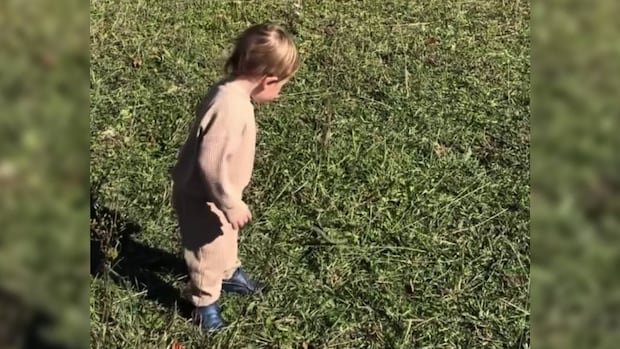


A 15-month-old boy from Sarnia, Ontario, is recuperating at his residence after being bitten by a rattlesnake during the Thanksgiving long weekend while at a family cottage. The incident led to his treatment at two hospitals and the administration of 18 doses of antivenom.
Wells Gladwish sustained the bite on his thumb around 12:45 p.m. on Sunday while enjoying time with his family at their cottage in Cape Chin North on the Bruce Peninsula. His father, Matt Huggett, recounted that the toddler encountered the snake near a family bonfire and attempted to handle it, resulting in the snake biting Wells on the thumb, causing it to turn white within about five minutes.
Recognizing the severity of the situation, Huggett expressed the urgency of reaching the nearest hospital, Lion’s Head, as quickly as possible. At Lion’s Head Hospital, medical staff faced challenges in establishing an IV line in the active toddler. After conducting a test dose to check for potential allergic reactions, the team administered 10 vials of antivenom out of the 14 available at the hospital.
A family member photographed the snake, later identified as an eastern massasauga rattlesnake, the only venomous snake species in Ontario, residing along the eastern shore of Georgian Bay and the Bruce Peninsula.
Huggett mentioned that doctors and toxicology specialists coordinated Wells’ transfer to London Health Sciences Centre (LHSC), Victoria Hospital, for further treatment. Due to delays and cancellations with Ornge air ambulance, a nurse at Lion’s Head advocated for Wells to receive the remaining four vials of antivenom and be transported to London via a land ambulance.
Following a three-hour ambulance journey, Wells reached LHSC’s Pediatric Critical Care Unit for continued treatment. Dr. Rishi Ganesan, a pediatric critical care physician at LHSC’s Children’s Hospital, emphasized the importance of securing antivenom promptly, highlighting the support received from Lion’s Head and the sourcing of additional antivenom from the Toronto region.
In London, Wells underwent two additional double doses of antivenom, totaling 18 doses. Ganesan, drawing upon his experience treating snakebites in India, underscored the critical nature of timely antivenom administration and the monitoring of venom impact on children.
Doctors closely monitored Wells’ condition for the need of further antivenom based on swelling and blood tests. Ganesan stressed that while antivenom is pivotal in treating snake envenomation, it does not address all associated issues.
After receiving care in London, Wells showed positive progress, and medical professionals anticipate a favorable outcome without significant long-term complications. Huggett expressed gratitude for the collaborative efforts of medical staff and specialists involved in Wells’ care.
Wells was eventually discharged from the hospital and returned home with his family in Sarnia. While he is using his thumb normally, the family continues to monitor his recovery and watch for potential adverse reactions to the antivenom.
In case of a rattlesnake bite, Ganesan advised treating it as a medical emergency and contacting emergency services immediately. He highlighted the importance of timely care for full recovery and urged caution when encountering eastern massasauga rattlesnakes while outdoors.