
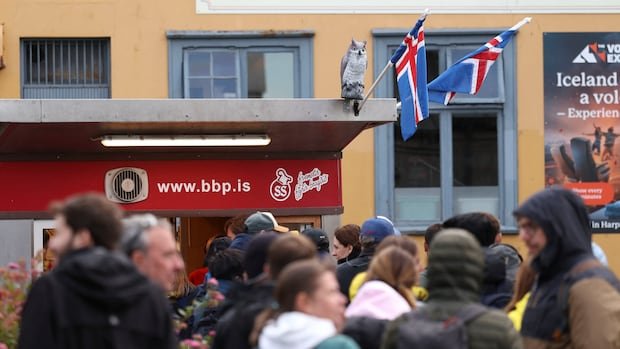


Icelanders have chosen to remain outside the European Union, as indicated by the results of a recent referendum. They turned down the government’s proposal to resume talks for EU membership, citing concerns that Iceland’s valuable fishing grounds could be jeopardized.
The decision comes after years of debate in the 400,000-strong Arctic nation about whether to pursue EU membership. Surveys leading up to the referendum suggested a shift in sentiment, with a majority ultimately voting against reopening negotiations with Brussels.
The referendum saw 52.8% of votes against the government’s stance, compared to 47.2% in favor, with a high voter turnout of 82.5%. While urban areas like central Reykjavik showed support for membership talks, rural regions and suburbs leaned towards rejection.
Proponents of EU accession argued that it could offer protection against trade disputes and Arctic challenges, presenting the referendum as a critical juncture. Prime Minister Kristrun Frostadottir underlined that a negative outcome would likely halt discussions on the matter during her administration.
Iceland’s potential EU entry had also drawn attention in Brussels, where officials hoped it could foster EU enlargement and enhance the bloc’s strategic position amid Arctic security concerns. The country, a NATO ally without its military, mulled over whether EU membership might bolster its defense, especially amid doubts raised by U.S. President Donald Trump regarding the alliance.
However, for many Icelanders, the primary focus was on the fishing industry, a vital sector contributing significantly to the country’s economy. With fishing accounting for 15% of GDP and 40% of export earnings, concerns about protecting these interests overshadowed security considerations.
Economic factors played a pivotal role in the referendum, with Iceland grappling with issues like inflation and high interest rates. Advocates for EU membership believed it could offer economic relief, potentially including adopting the euro. Iceland’s current central bank interest rate of 8% stands in stark contrast to the European Central Bank’s 2.25%.
Opposition leader Gudrun Hafsteinsdottir, a key figure in the “no” campaign, argued that the EU was not the solution to Iceland’s economic challenges, emphasizing the need for domestic resolutions. Voters like Ragnhildur Skarphedinsdottir, 70, echoed these sentiments, expressing confidence in Iceland’s ability to thrive independently.
Amid discussions on fishing quotas and sovereignty, there were conflicting views on whether joining the EU would impact Iceland’s control over its waters. While some officials believed Iceland could maintain authority based on historical fishing rights, skeptics like Hafsteinsdottir remained unconvinced, wary of potential compromises in the long run.