
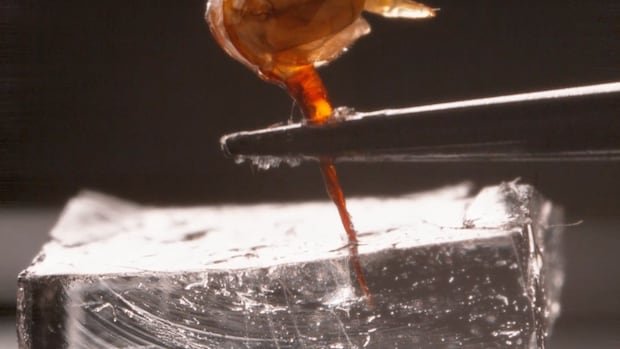


A western honey bee’s stinger serves as its final defense mechanism, typically leading to the bee’s demise as it injects venom into its target. New research from the Proceedings of the National Academy of Sciences sheds light on the efficacy of this weapon. Fiorella Ramirez Esquivel, a postdoctoral researcher at Macquarie University in Australia, highlighted the use of modern cameras to capture bee stingers in action, a feat made possible by high-speed filming technology.
The study utilized high-speed cameras to capture the rapid bee sting process, revealing the intricate structures within the venom sac and stinger. The experiments involved live honey bees, with researchers swiftly removing their stingers to observe the mechanisms at play. The unique double-piston design of the stinger was uncovered, showcasing how specialized valves drive the stinger deeper while continuously releasing venom into the target.
Juliana Rangel, an apiculture professor at Texas A&M University, expressed fascination with the study’s insights, emphasizing the role of the stinging apparatus in protecting the bee colony. The study highlighted the significance of autotomy, the act of sacrificing part of the body for defense, which is a characteristic of social species like the western honey bee. Honey bee stingers release pheromones to signal other bees to join in defense against threats, showcasing the intricate nature of their defense system.
The research not only provides a deeper understanding of honey bee stingers but also raises questions about the evolution of similar mechanisms in other honey-producing bee species. By delving into the complex workings of bee stingers, this study may offer valuable insights with potential applications in various fields.