
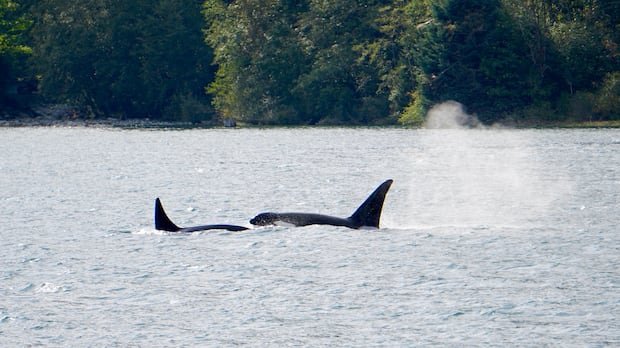


John Ford has devoted his life to studying the killer whales along the West Coast and their distinct vocalizations. After over 45 years of recording and organizing these sounds, a new online database now allows anyone to access them. This innovative tool raises optimism for potentially aiding in the detection and protection of these marine animals from collisions with vessels.
A former scientist with Fisheries and Oceans Canada, Ford initiated his collection of orca sounds during his graduate studies in the late 1970s. His research revealed that different subgroups of orcas use unique sets of calls to communicate and identify each other within their family groups over vast distances while they hunt and forage.
These calls, categorized into various consistent subgroups, range from smaller pods and clans to larger populations like the northern and southern residents and Bigg’s, also known as transient orcas. Ford emphasized that these calls remain remarkably stable over generations, passed down through vocal learning.
Decades later, the HALLO project at Simon Fraser University has published the orca sounds in an online call catalog, including calls from various orca populations such as Bigg’s, northern and southern residents. This database enables users to filter calls by clan and pod, allowing individuals monitoring whale sounds from coastal hydrophones to compare and identify different orca populations.
The online catalog, a significant advancement from the hard copy version published in the late 1980s, provides a comprehensive platform to explore and listen to various orca calls. Environmental science professor Ruth Joy from SFU mentioned that this tool will empower citizen scientists tracking orca populations to mitigate risks posed by large vessels, a crucial step in safeguarding the critically endangered southern resident orcas, currently numbering only 75 individuals.
Despite the progress, the current catalog does not differentiate individual whales within family groups or include offshore orcas, a less studied population. The meaning behind these vocalizations remains a mystery to science. Ford expressed his aspirations for the catalog to expand its coverage to include more populations and urged researchers worldwide to compile similar databases for their local orca groups.
The availability of this catalog to the public marks a significant milestone for Ford, who expressed his enthusiasm for making this valuable resource accessible to everyone.