
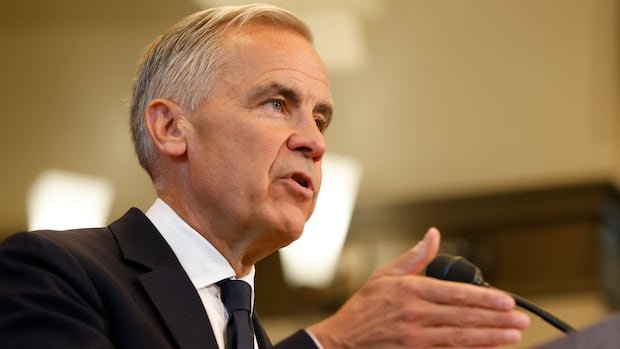


Prime Minister Mark Carney has revealed that negotiations with the Trump administration fell apart due to demands that would harm major Canadian industries like auto, steel, and aluminum. Carney stated that despite initial progress, they could not agree on the terms offered by the U.S. Vice-President JD Vance presented a contrasting view, accusing Canada of making unreasonable demands.
Ontario Premier Doug Ford labeled the proposed deal as unfavorable, emphasizing the negative impact it would have had on Canadian industries. Flavio Volpe, a member of Canada’s advisory committee, explained that discrepancies arose when translating the spirit of the deal into precise wording.
The crucial moment came when the U.S. revealed plans to exclude medium and heavy-duty trucks from tariff relief, a move that would have significantly affected Canadian production, particularly pickup trucks. Additionally, the U.S. aimed to limit Canada’s ability to engage in trade agreements with other countries, which Carney deemed a threat to Canadian sovereignty.
On the issue of sectoral tariffs, Carney insisted that Canada would only agree if it benefited the country. The negotiations also stumbled on American tariff relief for steel, aluminum, and derivative products.
Furthermore, disputes emerged over Canadian requirements for bilingual product labeling, with the U.S. pushing back against French-language content regulations. Carney highlighted these issues as pivotal factors in his decision to reject the proposed agreement.
Carney was prepared to make concessions if the U.S. significantly reduced tariffs on Canadian industries. However, with little movement on key issues, Carney stood firm in his commitment not to sign a detrimental deal. Polling data suggests strong support for Carney’s decision to walk away from the negotiations.