
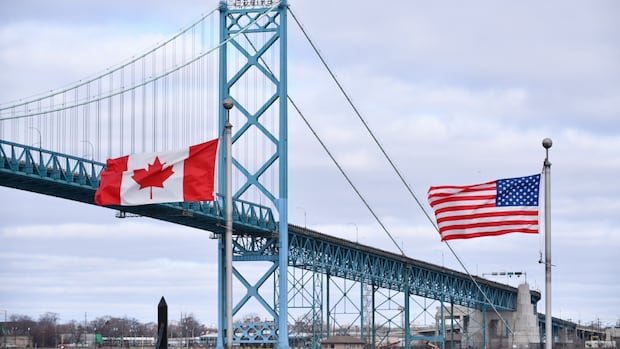


Cocaine remains the most seized illicit substance along the Canada-U.S. border in southwestern Ontario, based on data provided by authorities from both countries. During the initial half of this year, the Canada Border Services Agency (CBSA) confiscated over 827,000 grams of cocaine valued at more than $82 million at various border points including the Ambassador Bridge, Detroit-Windsor Tunnel, Blue Water Bridge, Peace Bridge, Queenston Bridge, Rainbow Bridge, and Walpole Island.
In the previous year, CBSA intercepted 1,631,981 grams of cocaine, followed by 1,515,369 grams in 2024, each amounting to over $150 million. Justin Morgan, the chief of operations at the Ambassador Bridge for CBSA, highlighted that the primary flow of narcotics originates from the United States.
According to U.S. Customs and Border Protection (CBP) data, cocaine also ranked as the most seized substance at the same border crossings in southwestern Ontario. The CBP seized 927,142 grams of cocaine in 2024 and 2,092,875 grams in 2025. Lavarah Miller, a Customs and Border Protection watch commander, emphasized that a significant portion of the seized substances heading to Canada from the U.S. are not domestically sourced.
In the current year, marijuana seizures by CBP have surpassed cocaine seizures by a substantial margin, with 1,797,133 grams and 242,218 grams, respectively, between October 1, 2025, and July 6, 2026.
Benoît Gomis, a lecturer at the Munk School of Global Affairs and Public Policy, pointed out that the seizure data on illegal substances collected by law enforcement agencies may not provide a comprehensive overview of border activities. The underlying reasons for undetected border crossings remain unclear, and drug seizure patterns lack contextual information.
Gomis elaborated on the appeal of cocaine to criminal networks, citing its stable supply chain primarily sourced from Colombia and Peru. The drug’s ease of transportation due to its compact size, coupled with established distribution networks, contributes to its attractiveness for criminal operations.
Research findings suggest an upward trend in cocaine consumption, with an estimated two to three percent of the adult population reported to have used the substance in the past year. The increasing purity of cocaine in regions like the U.S., Canada, and Western Europe poses significant health risks, with the drug often mixed with other substances like fentanyl.
The United Nations Office on Drugs and Crime identifies global drug trafficking, especially cocaine, as a prominent threat. The organization underscores the detrimental impact of cocaine abuse in Canada, referencing statistics indicating its prevalence among individuals seeking treatment.
Enhanced detection technologies and protocols employed by agencies like CBSA play a crucial role in intercepting illicit substances at border crossings. The recently opened Gordie Howe International Bridge features advanced X-ray capabilities and inspection lanes to facilitate efficient commercial truck examinations, enhancing border security measures.
Overall, the challenges posed by cocaine trafficking underscore the ongoing efforts of law enforcement agencies on both sides of the Canada-U.S. border to combat illicit drug activities and safeguard public safety.